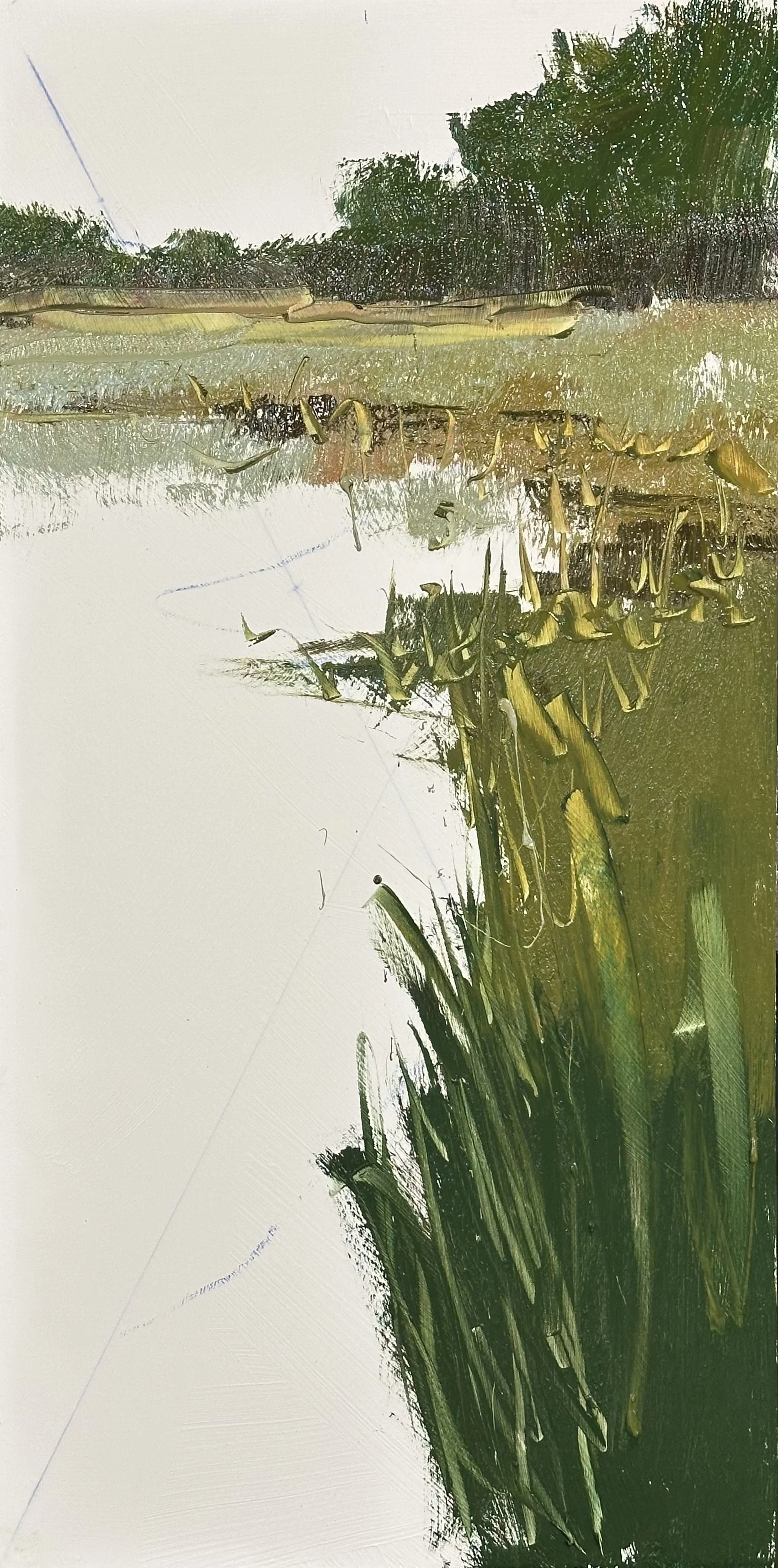
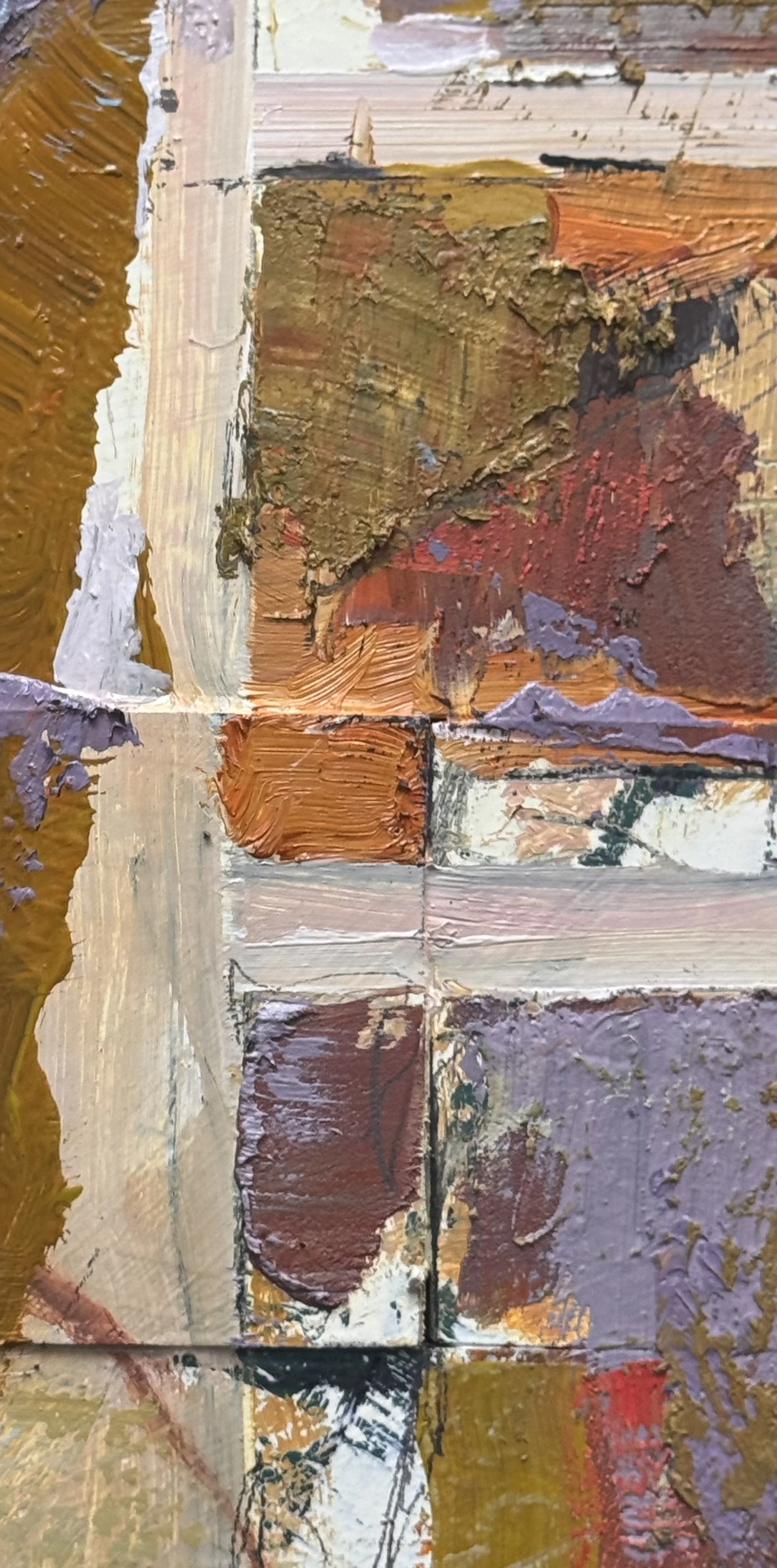
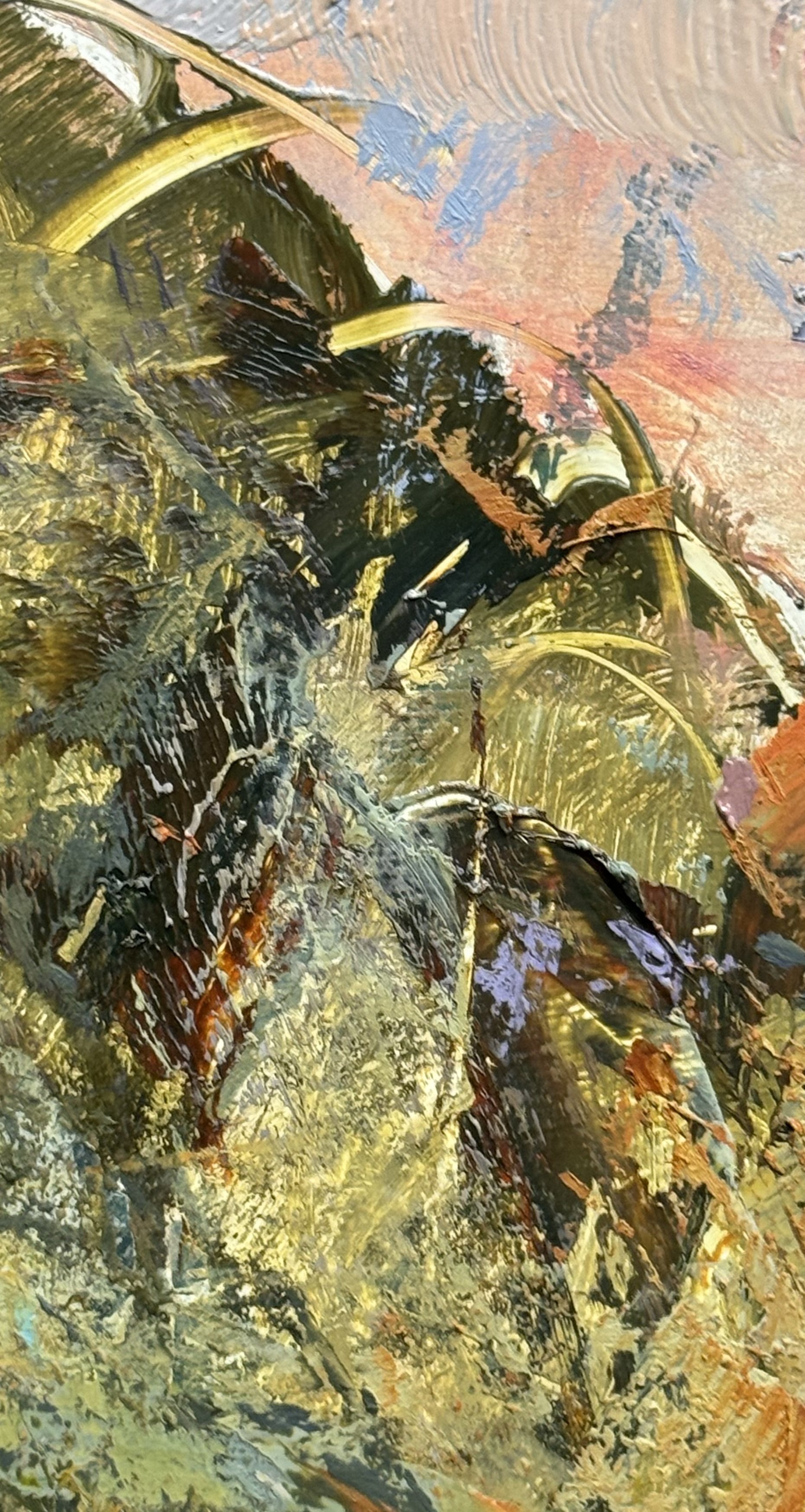
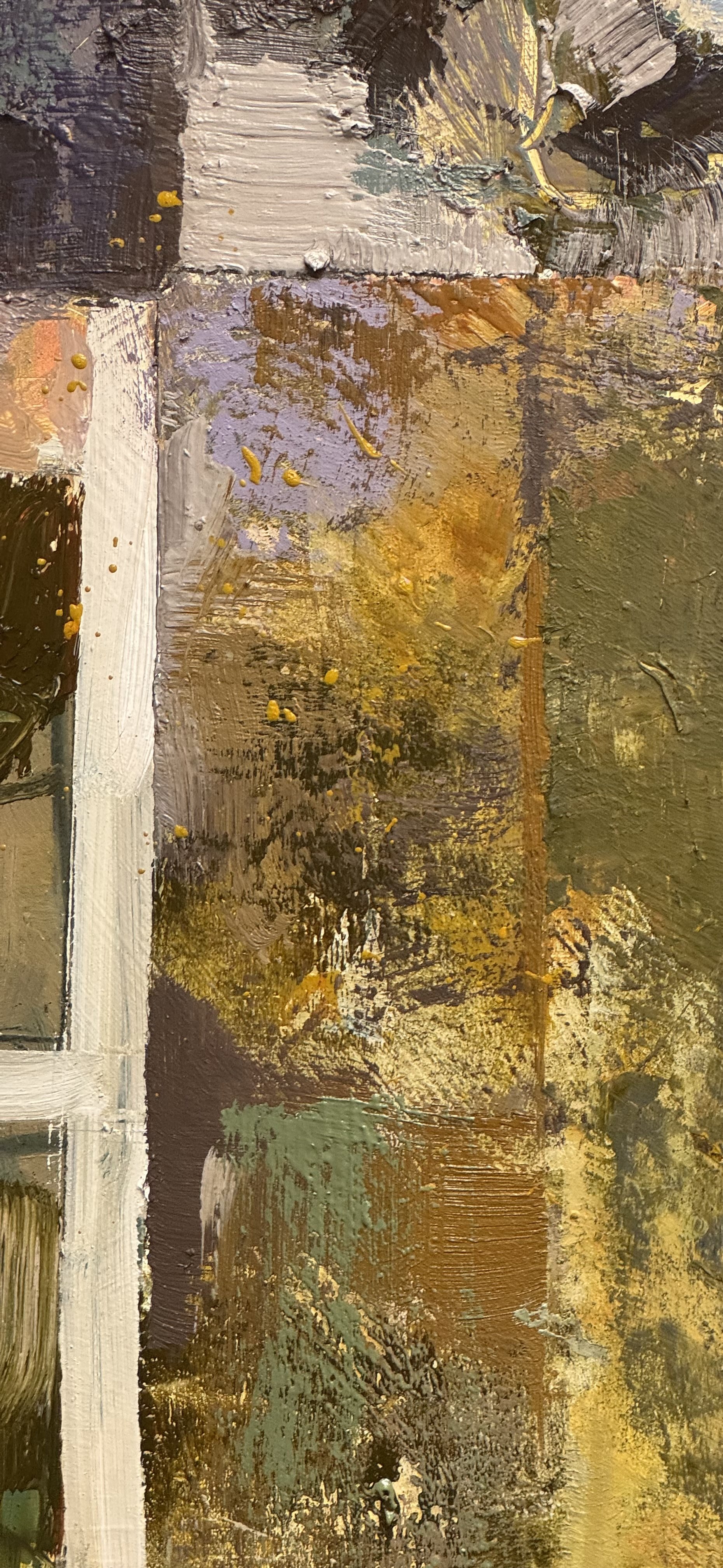
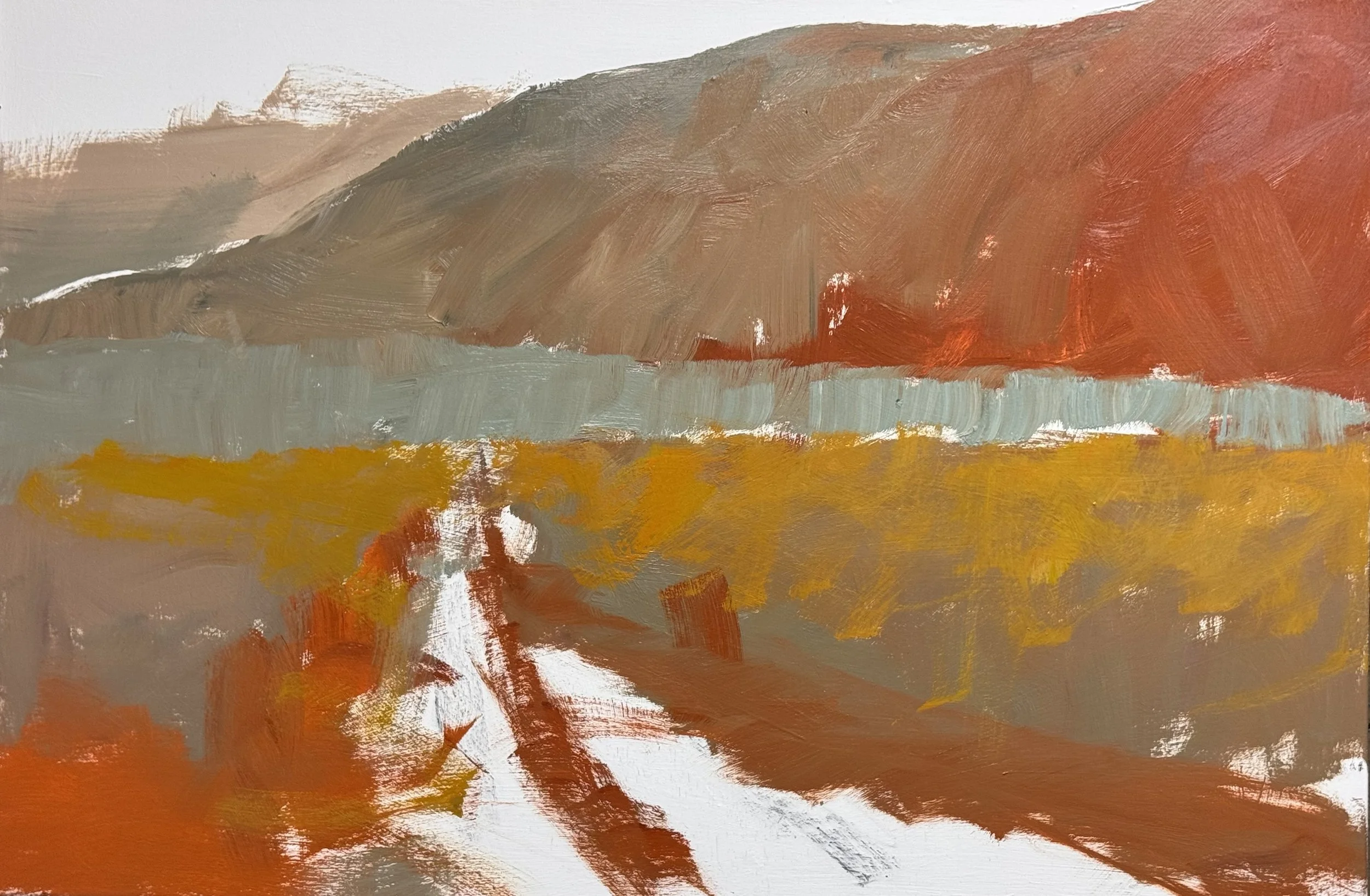
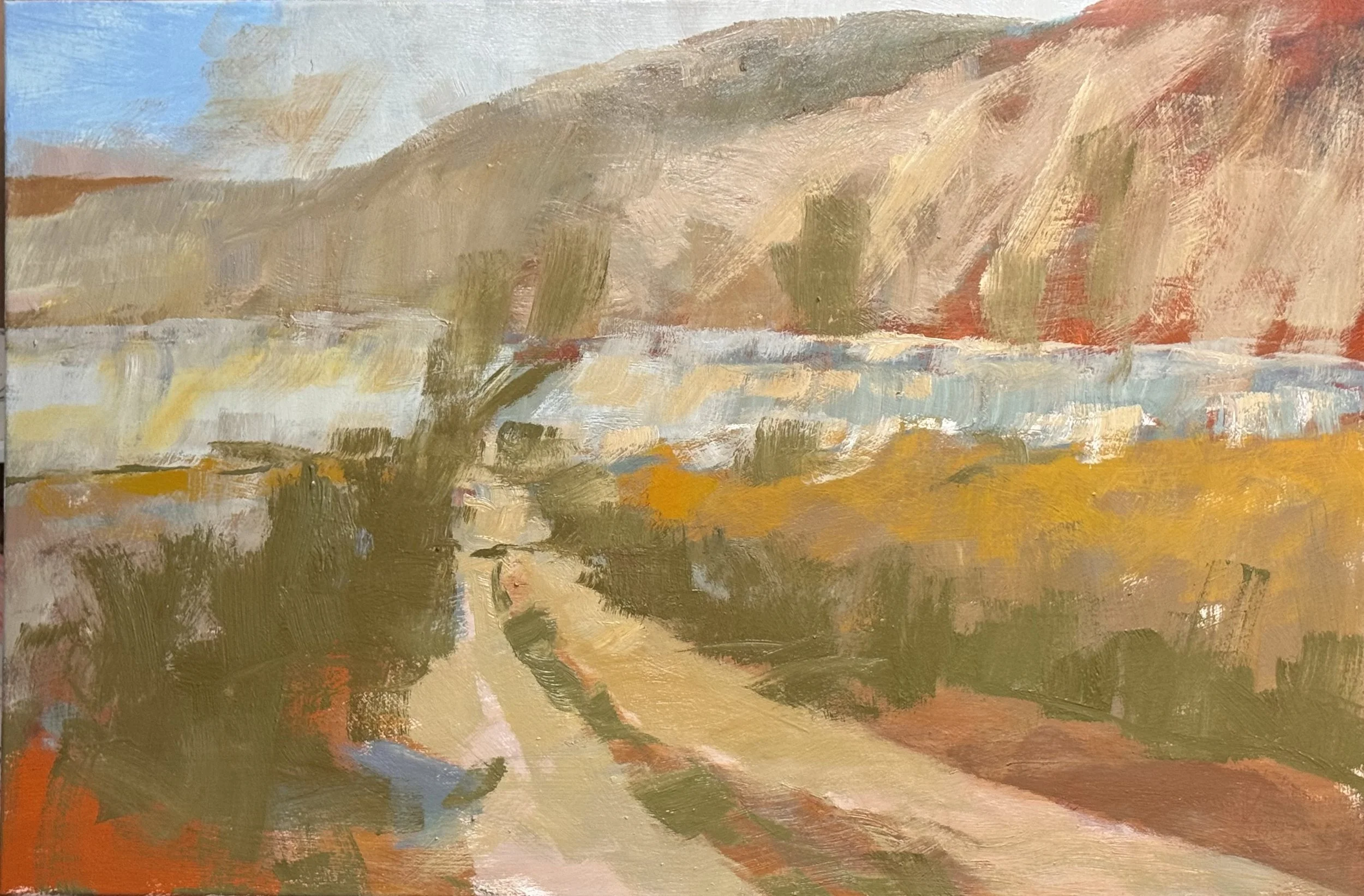
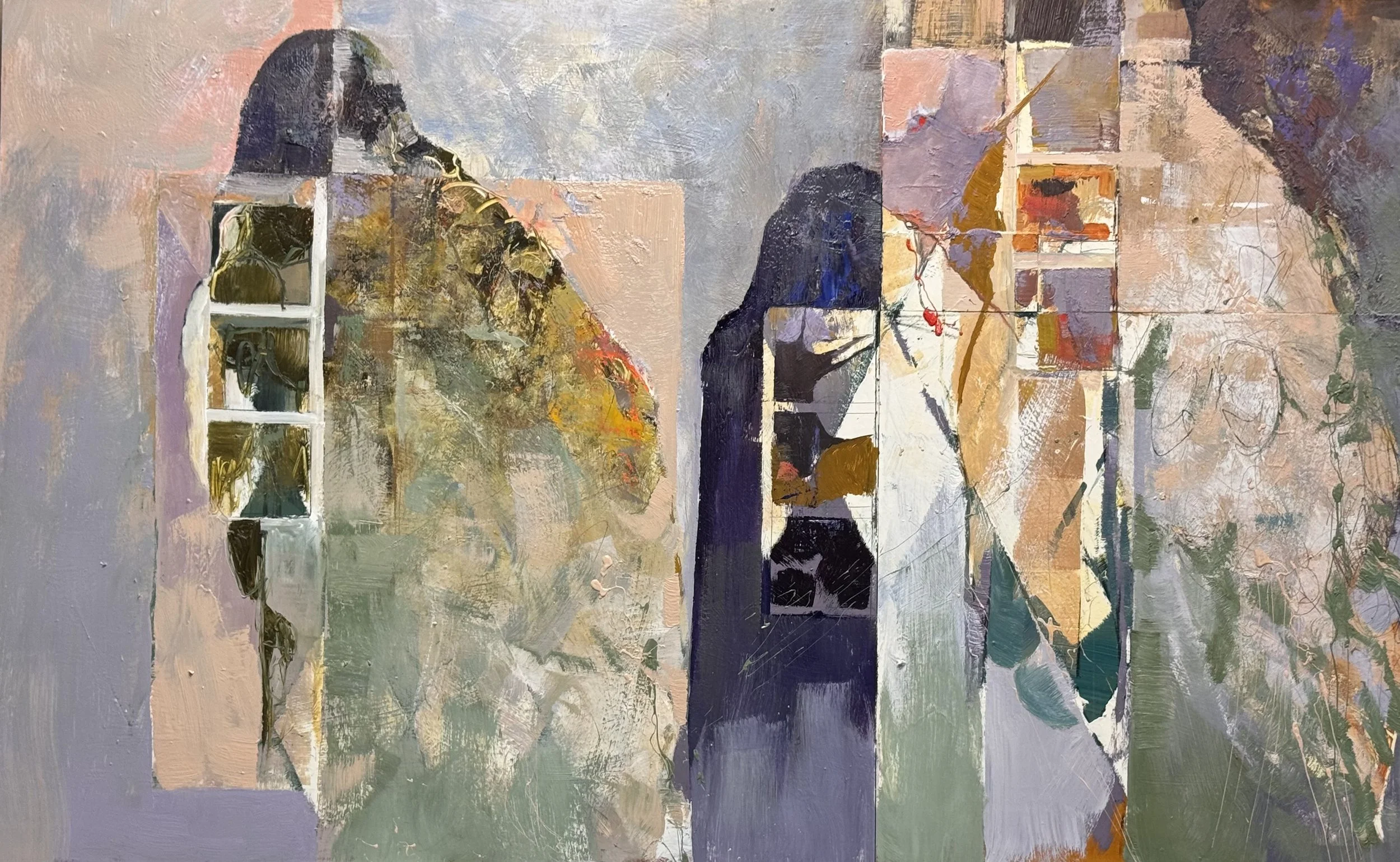
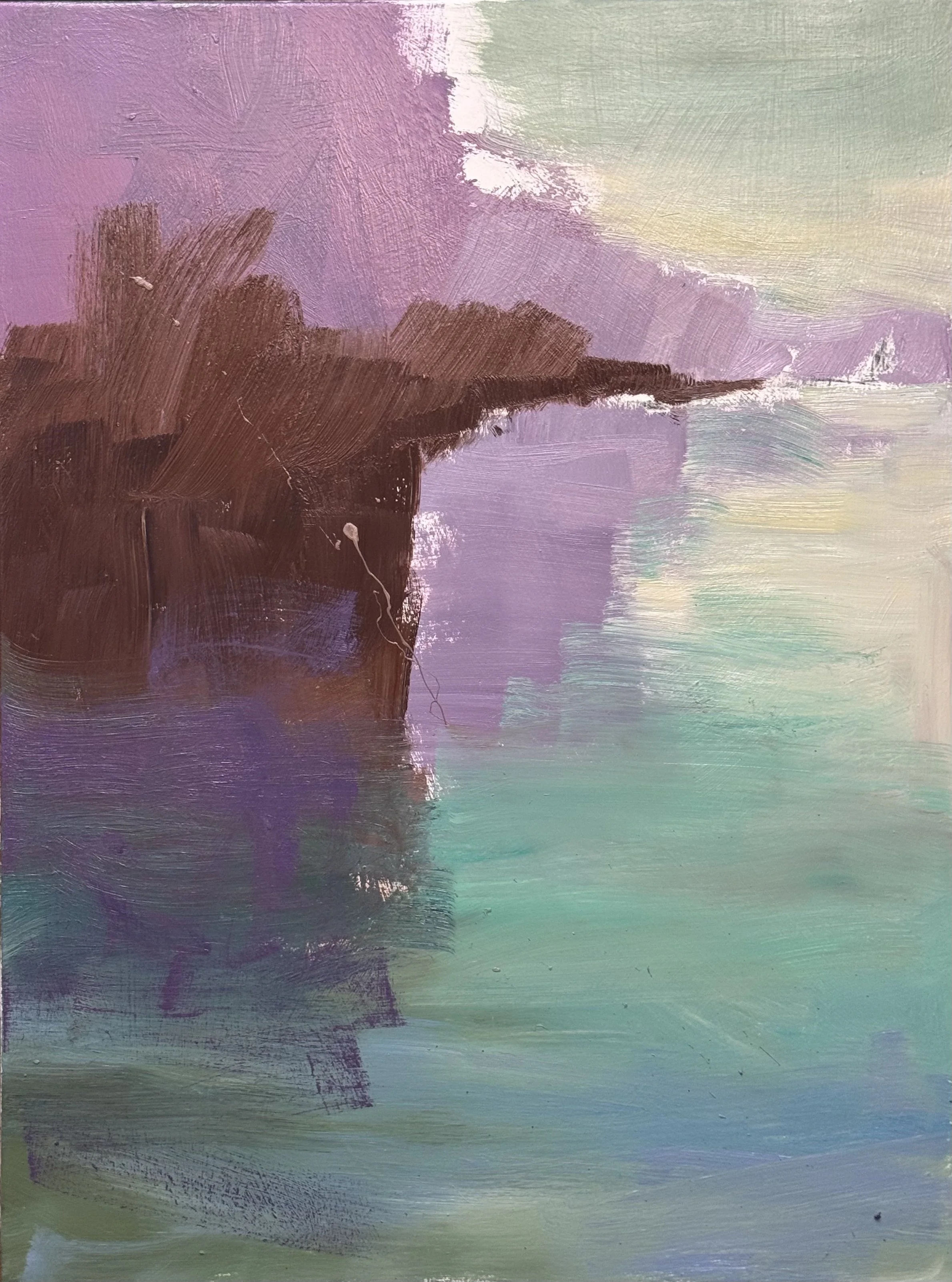
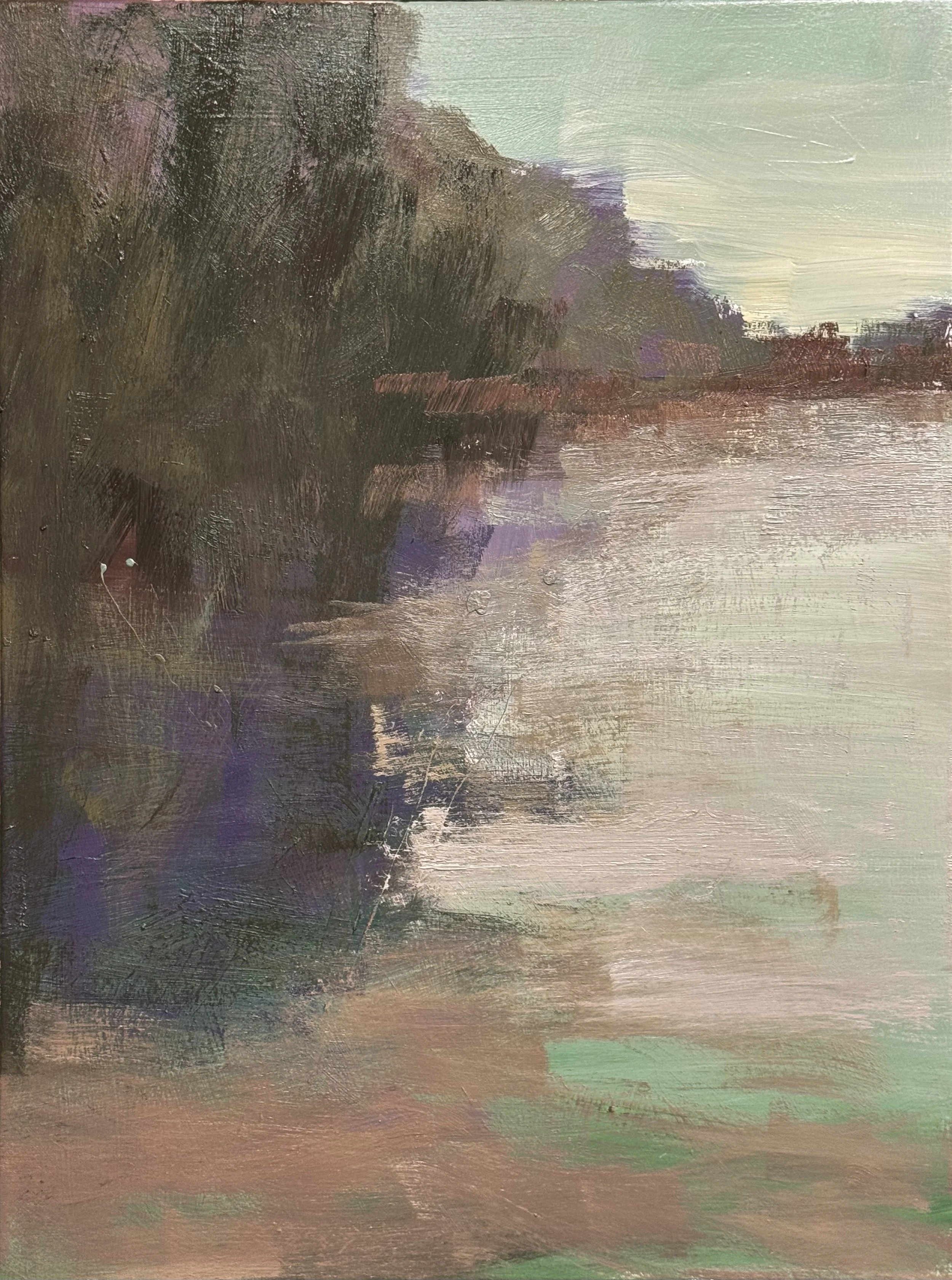
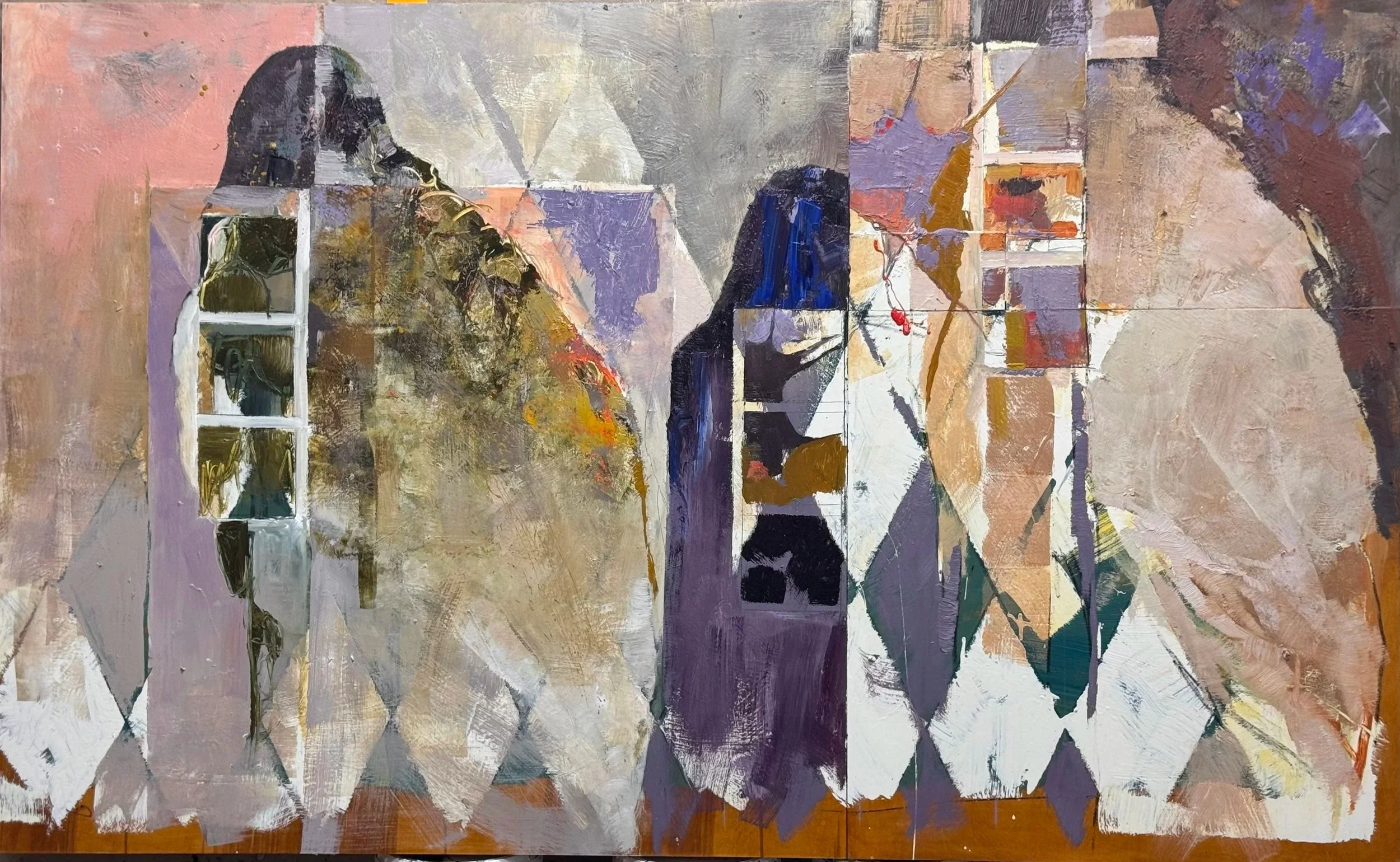
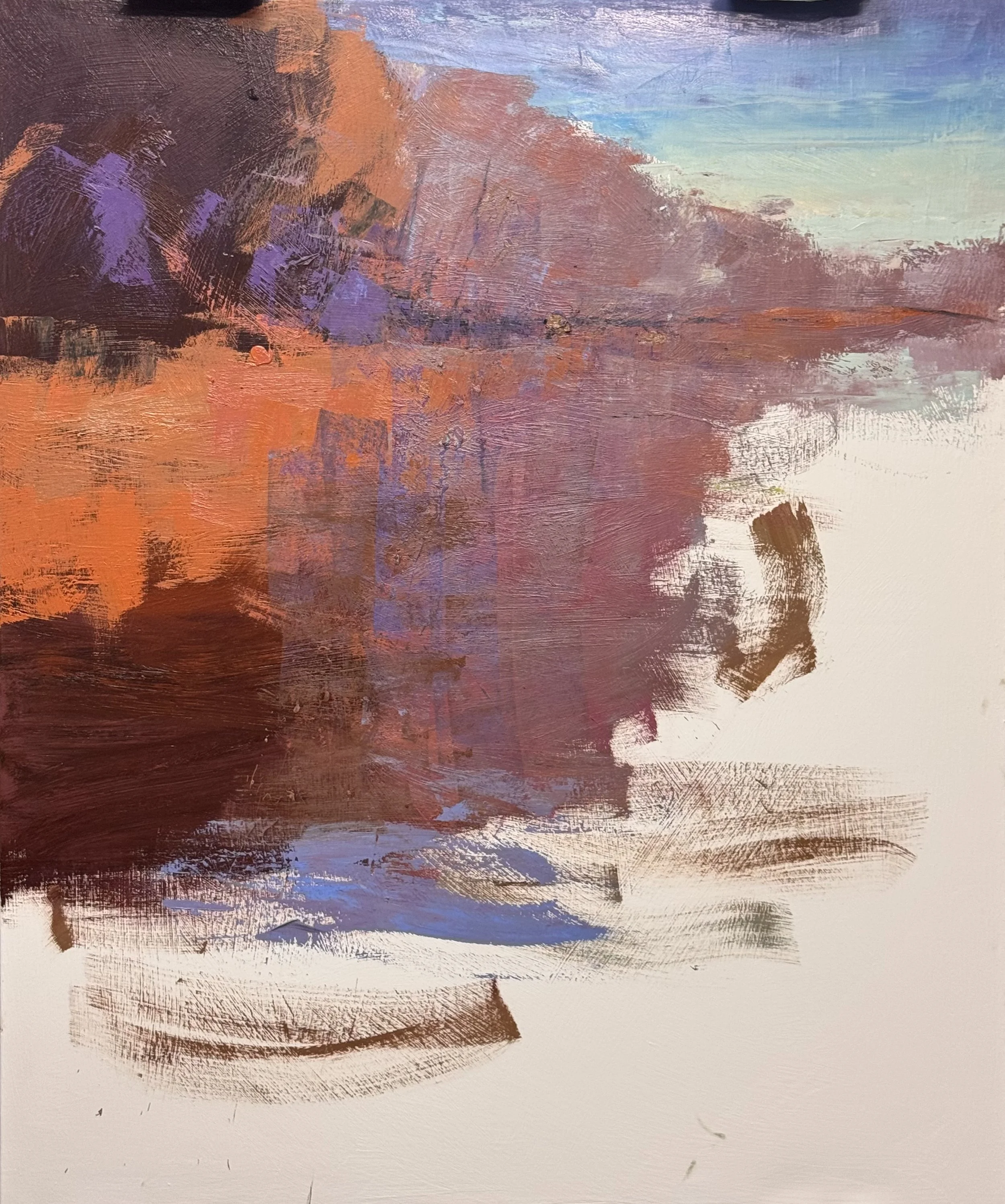
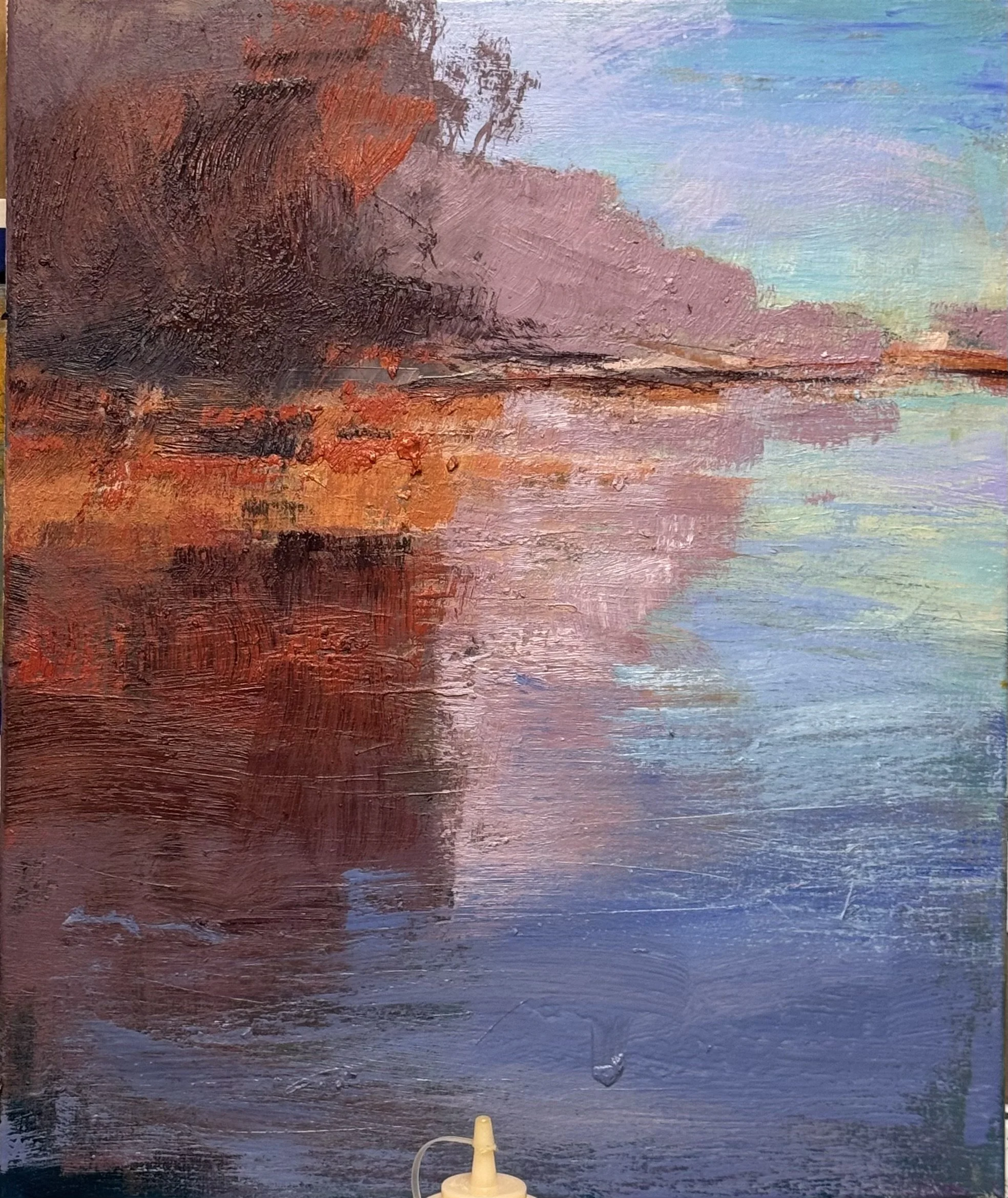
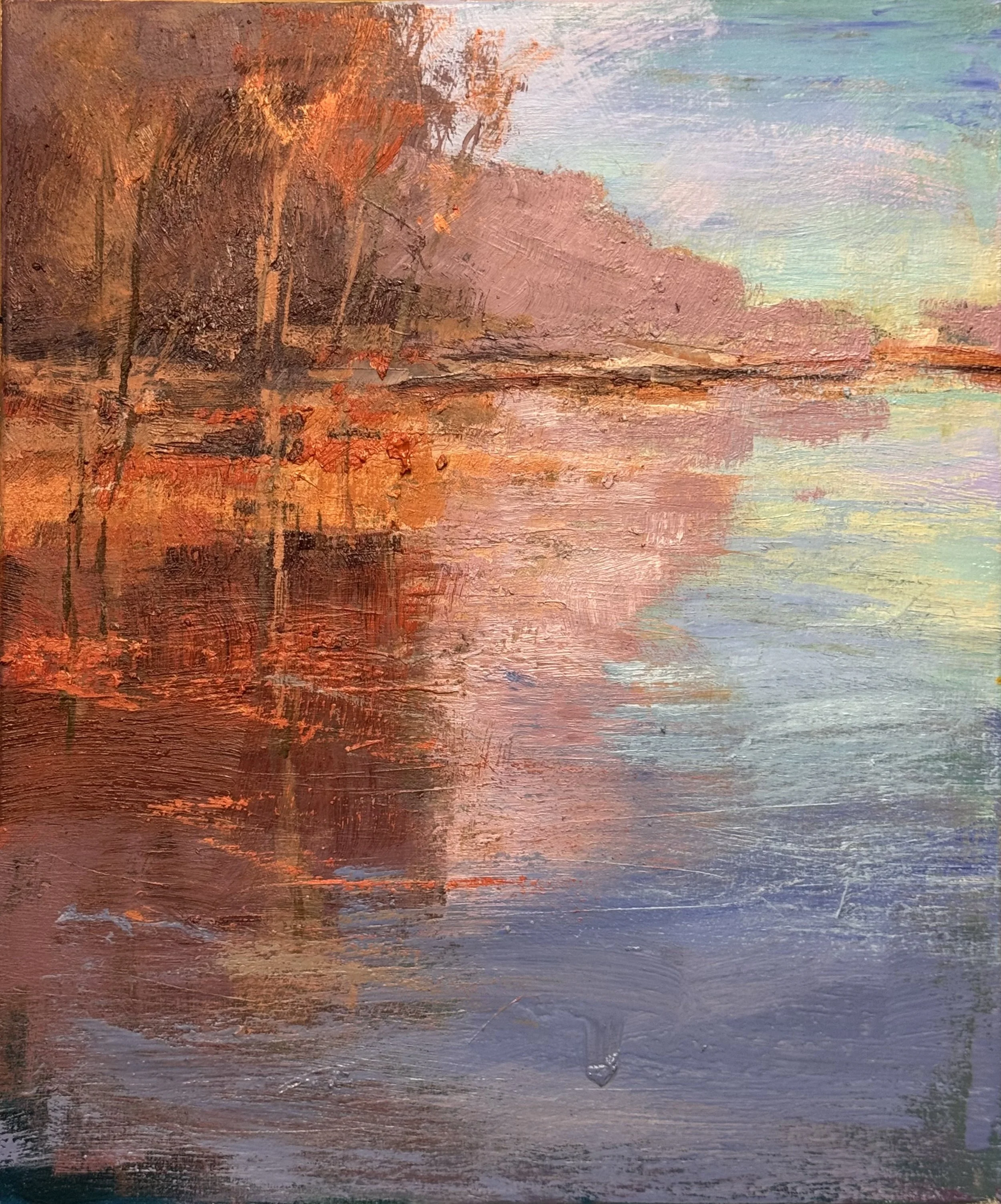
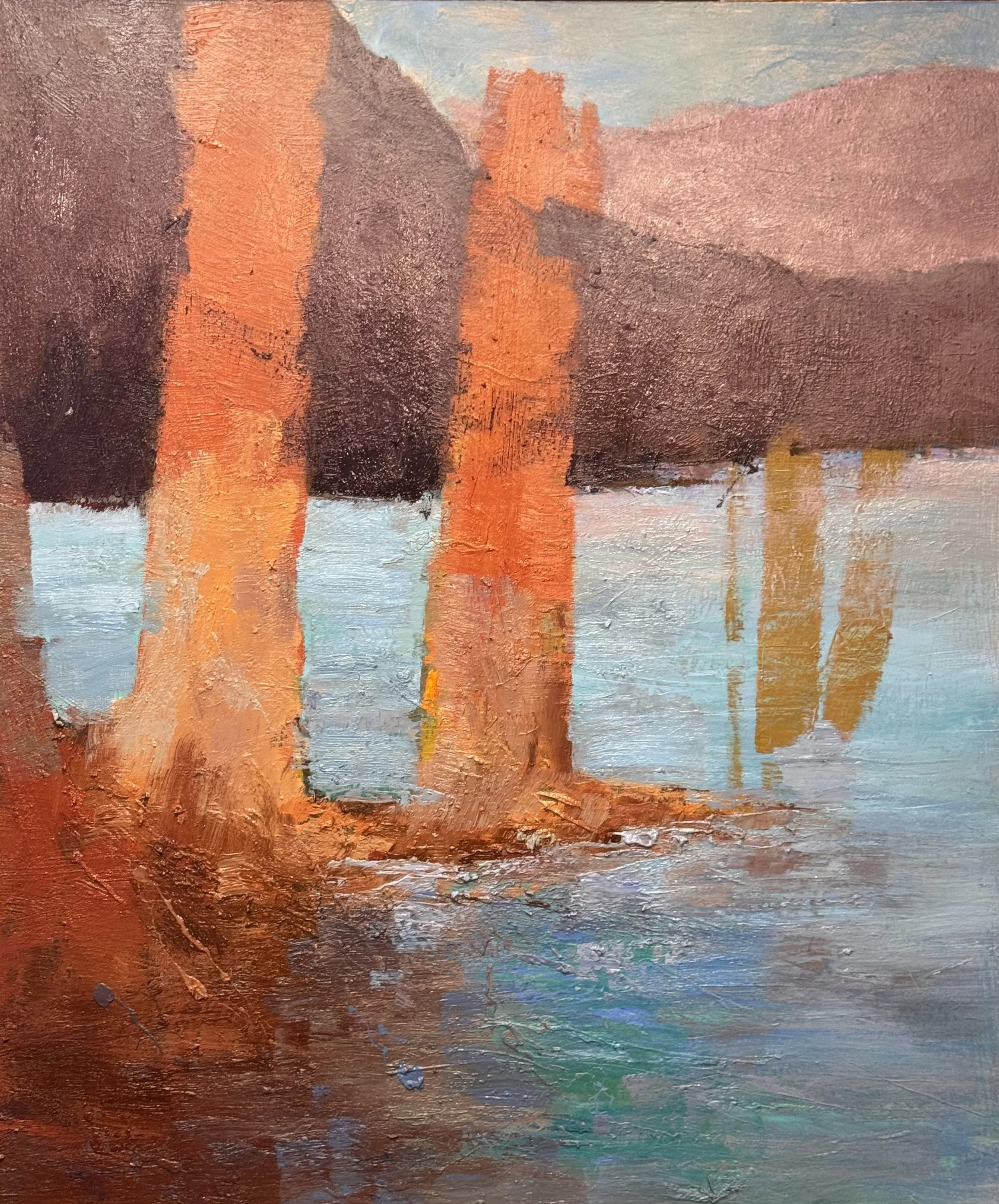
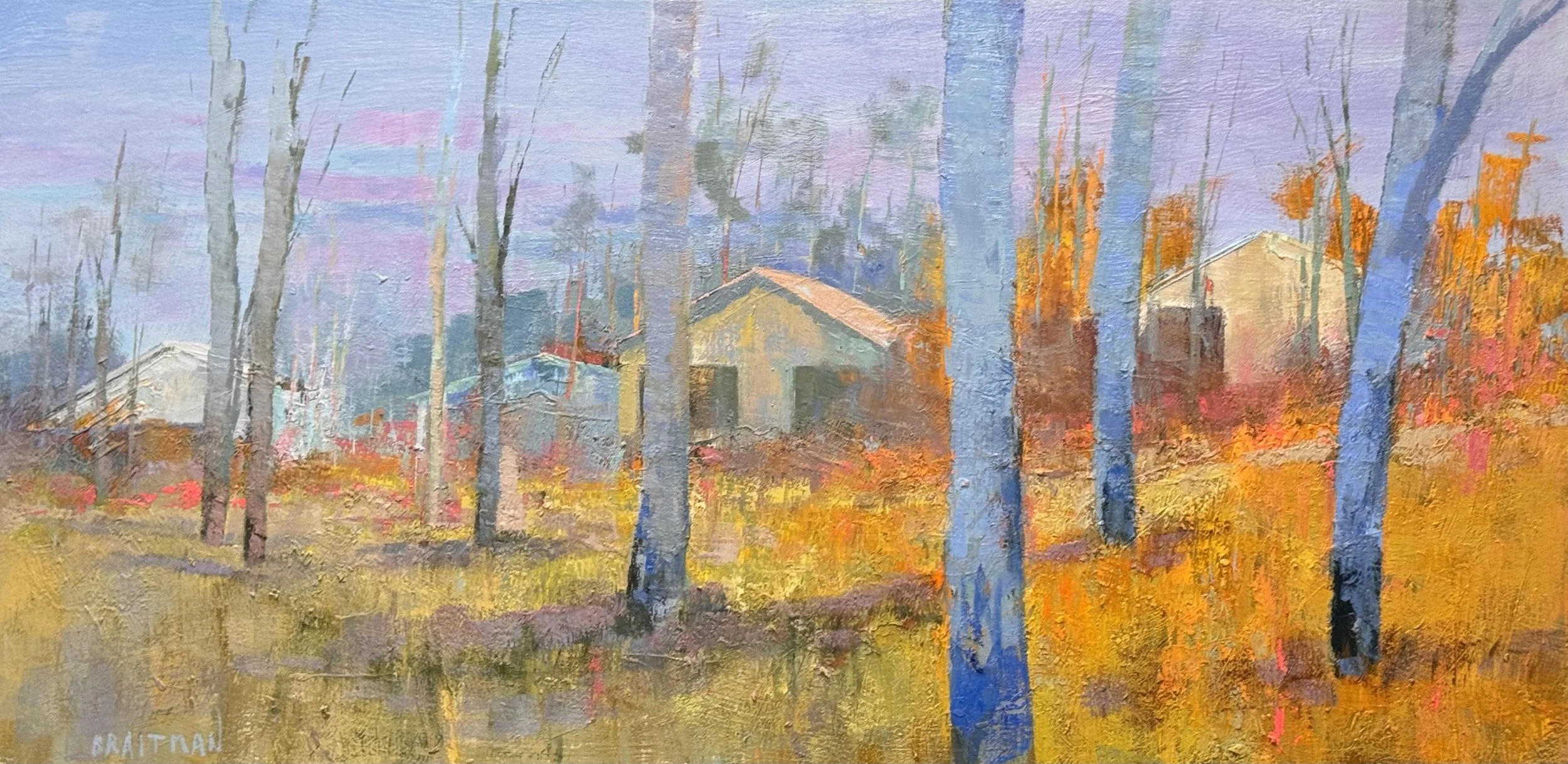
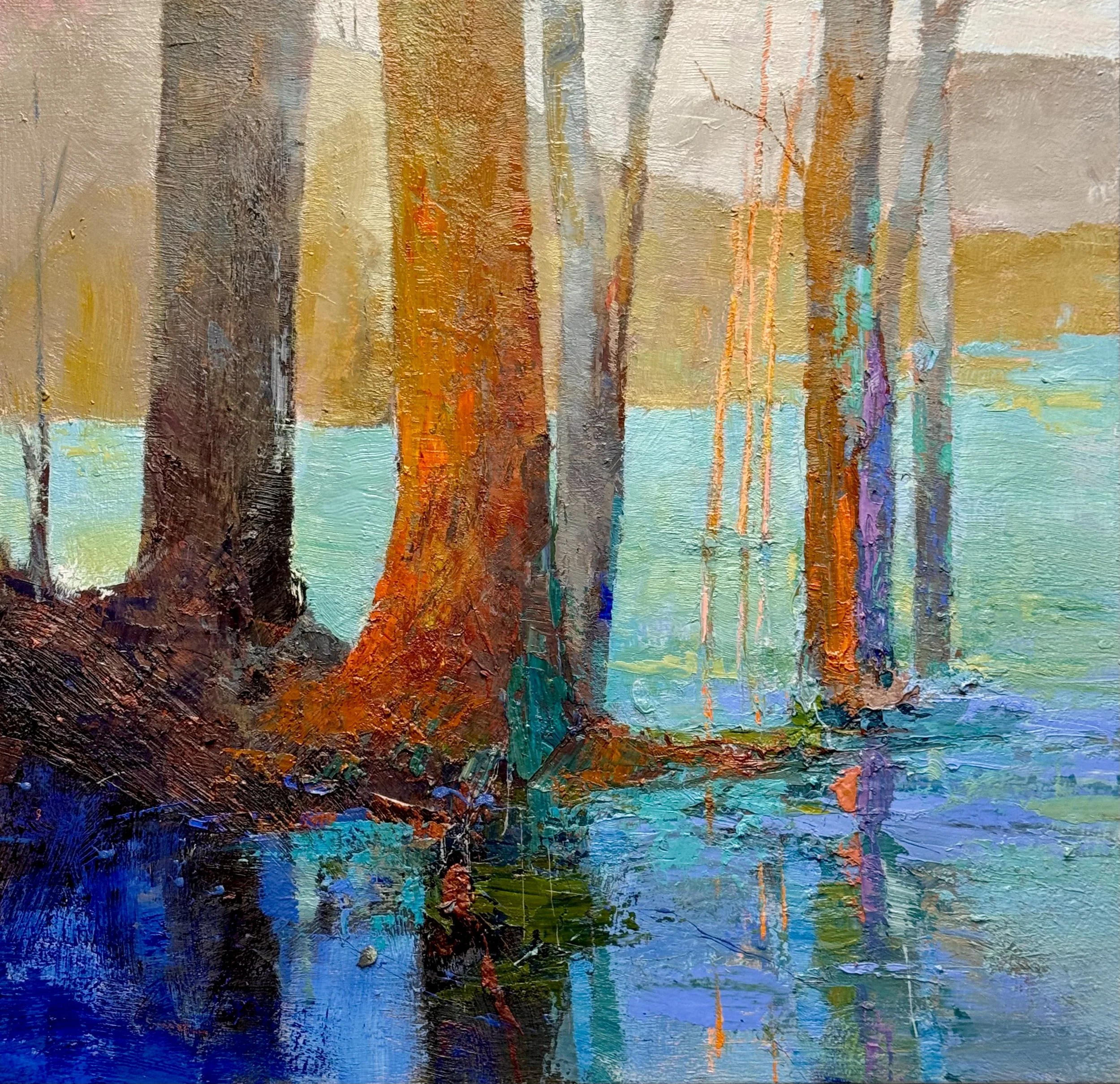
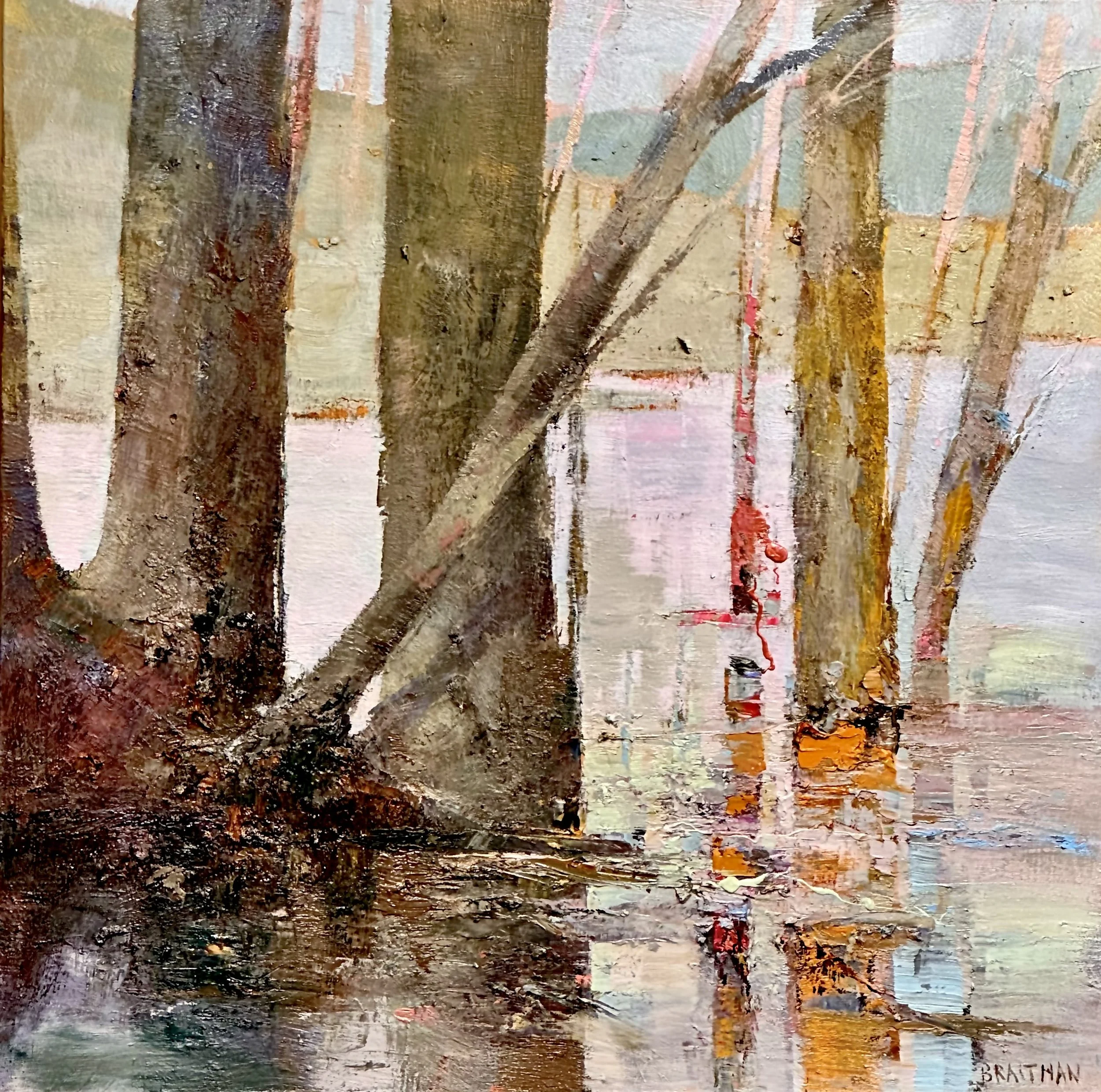
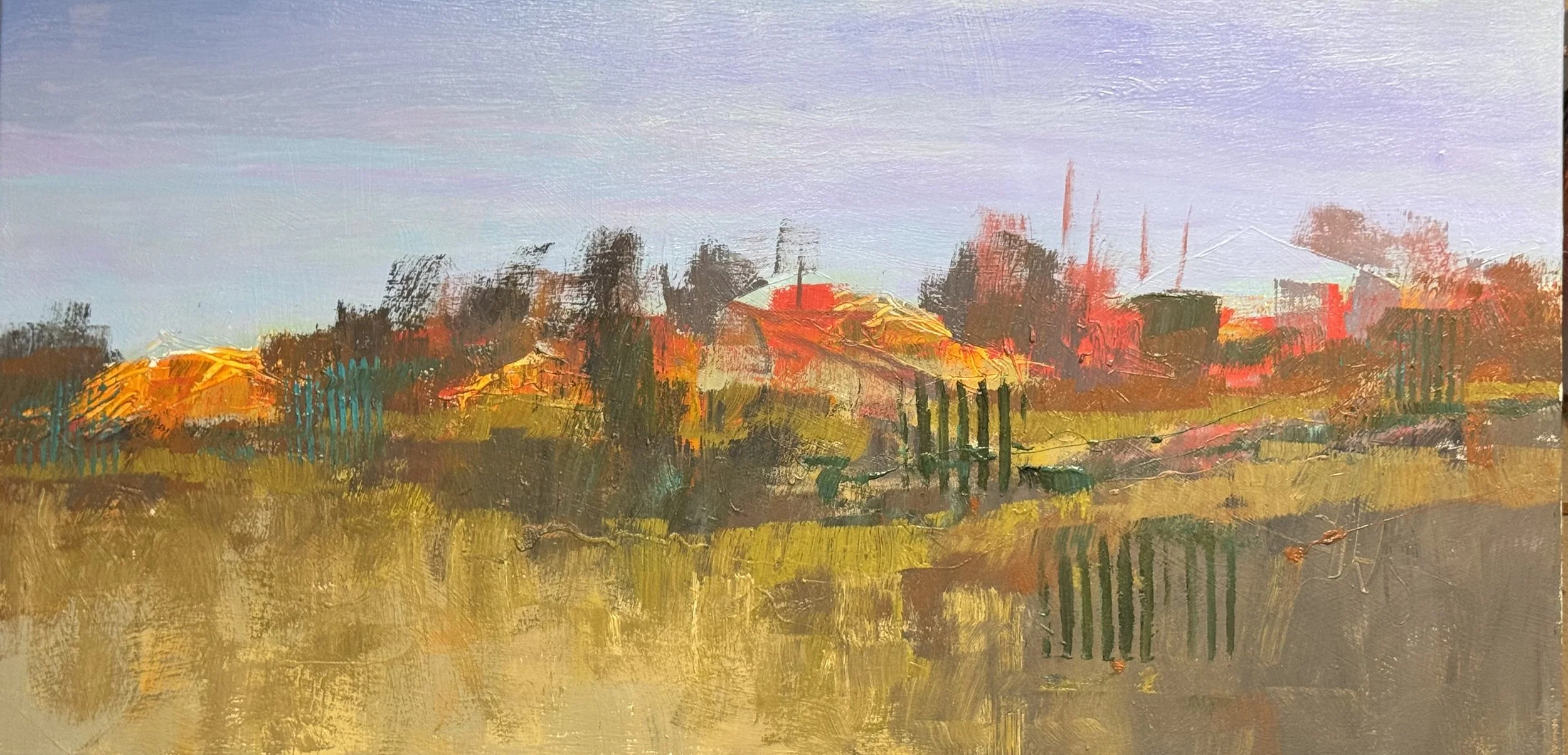
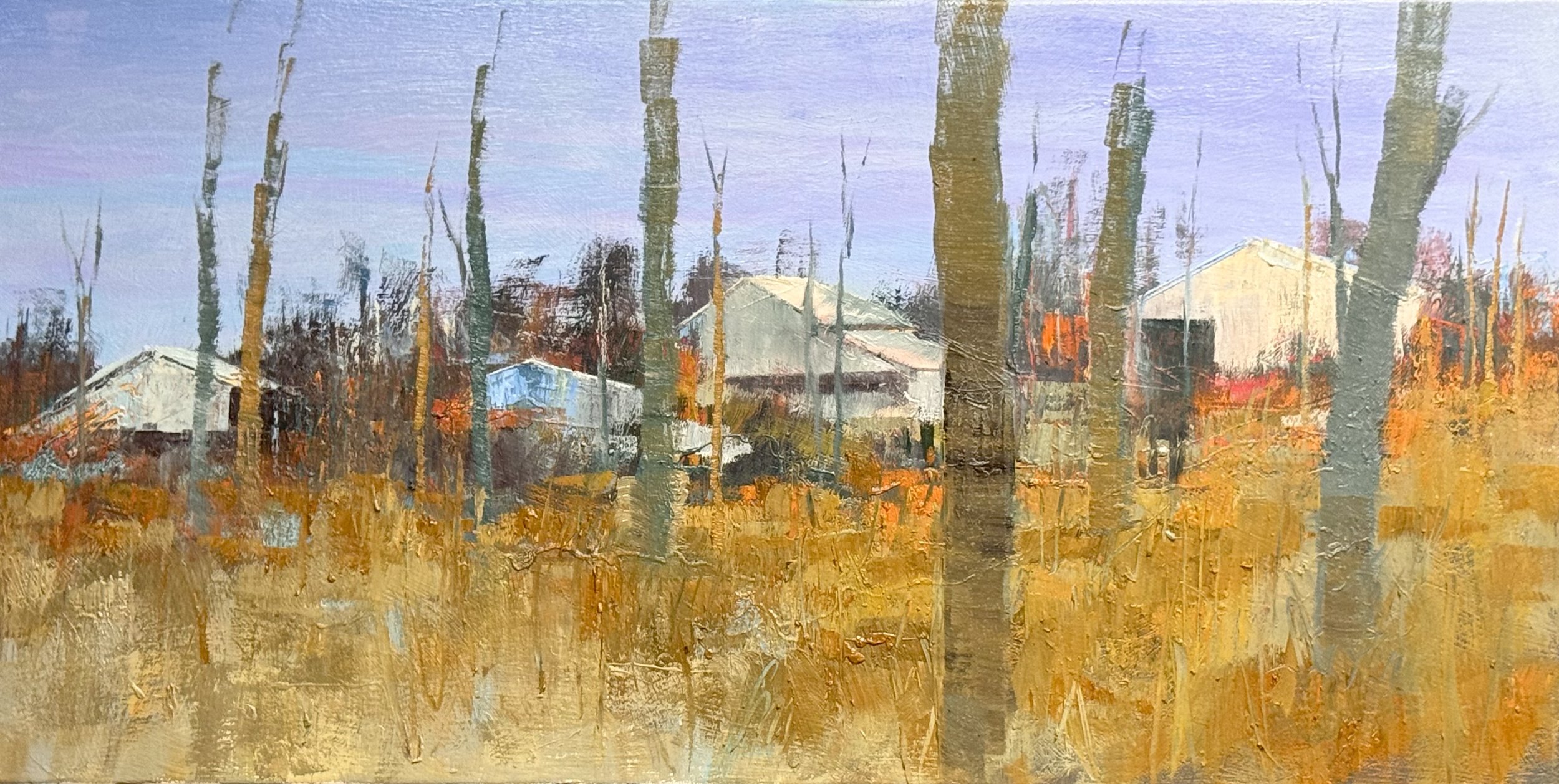
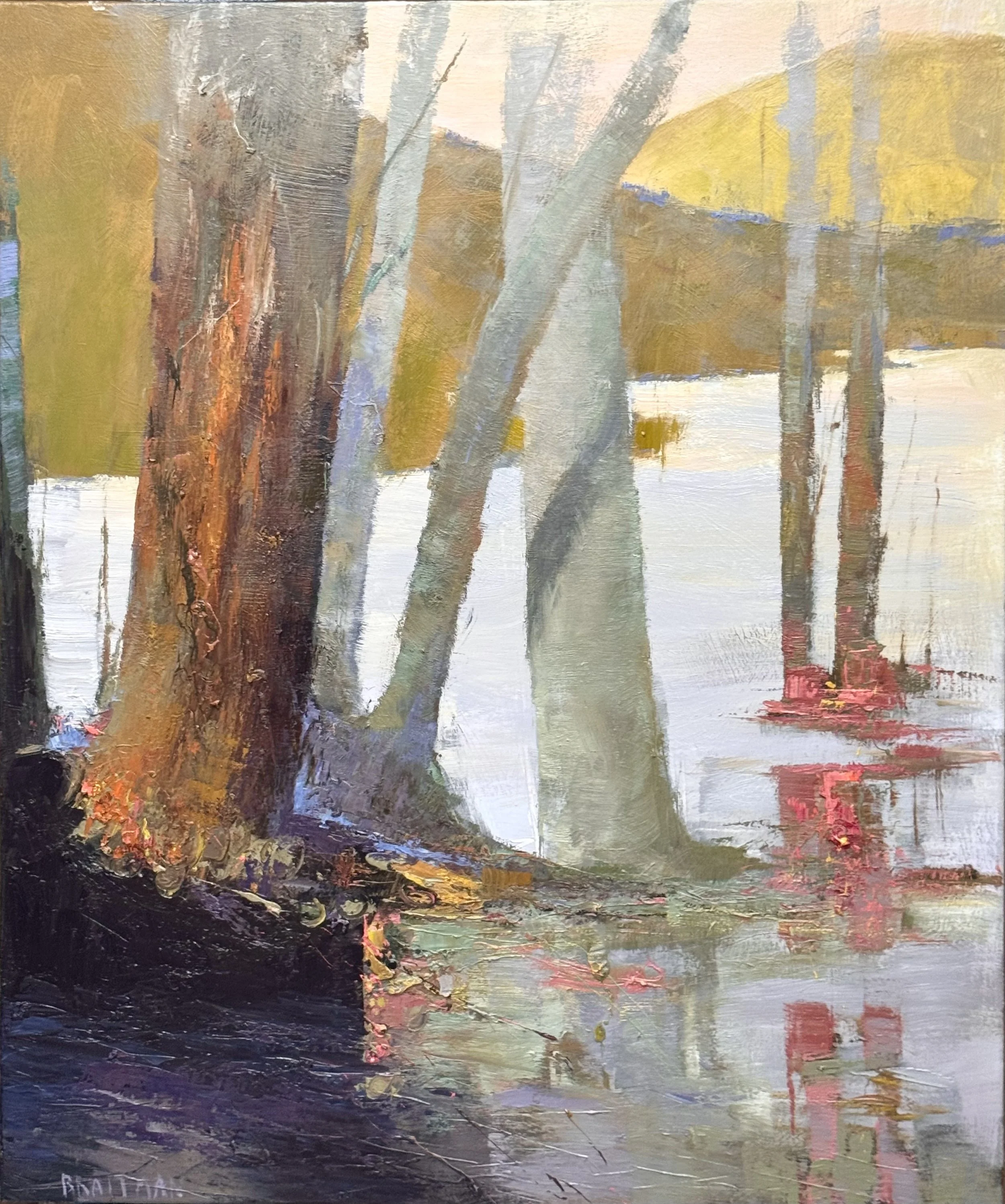
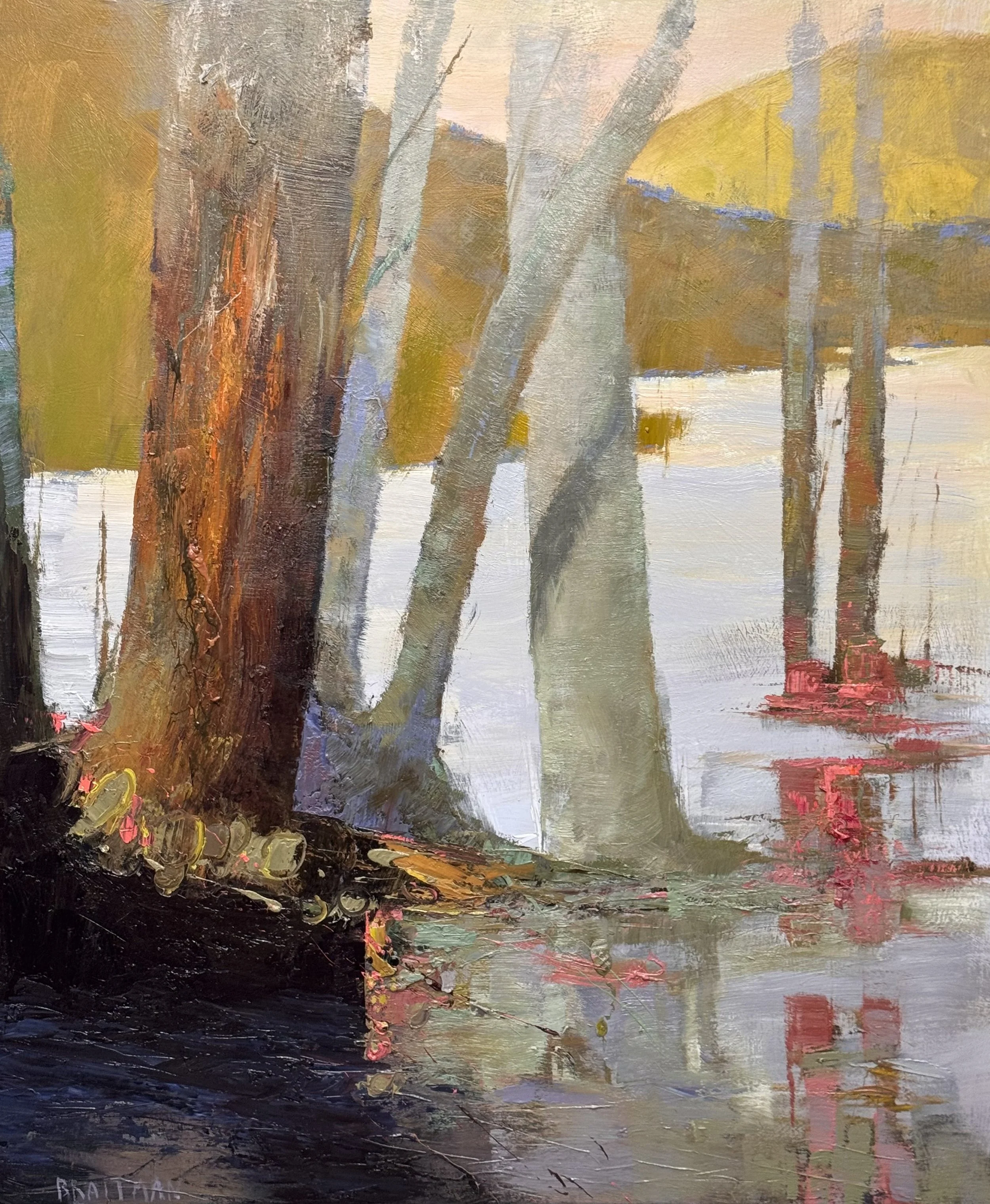
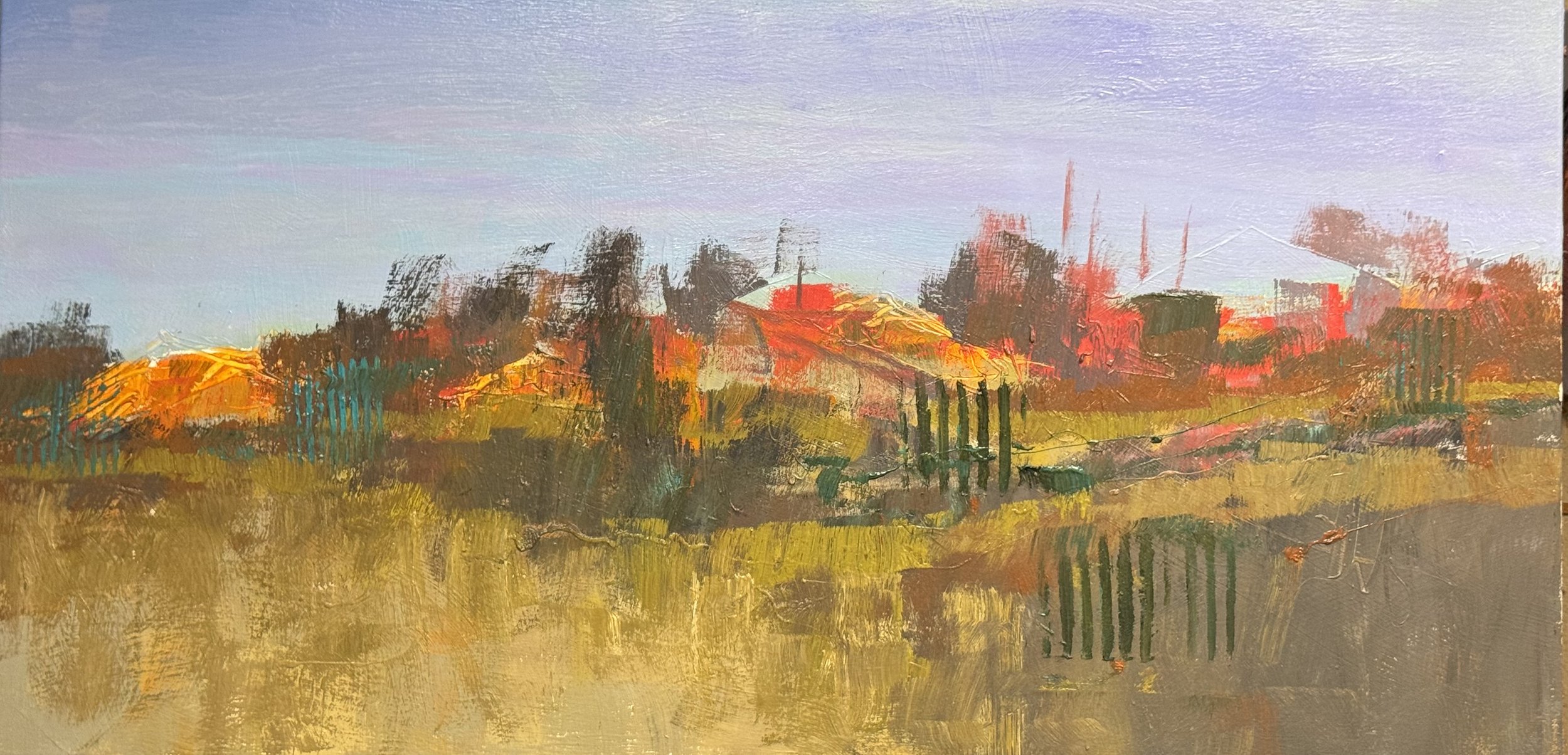
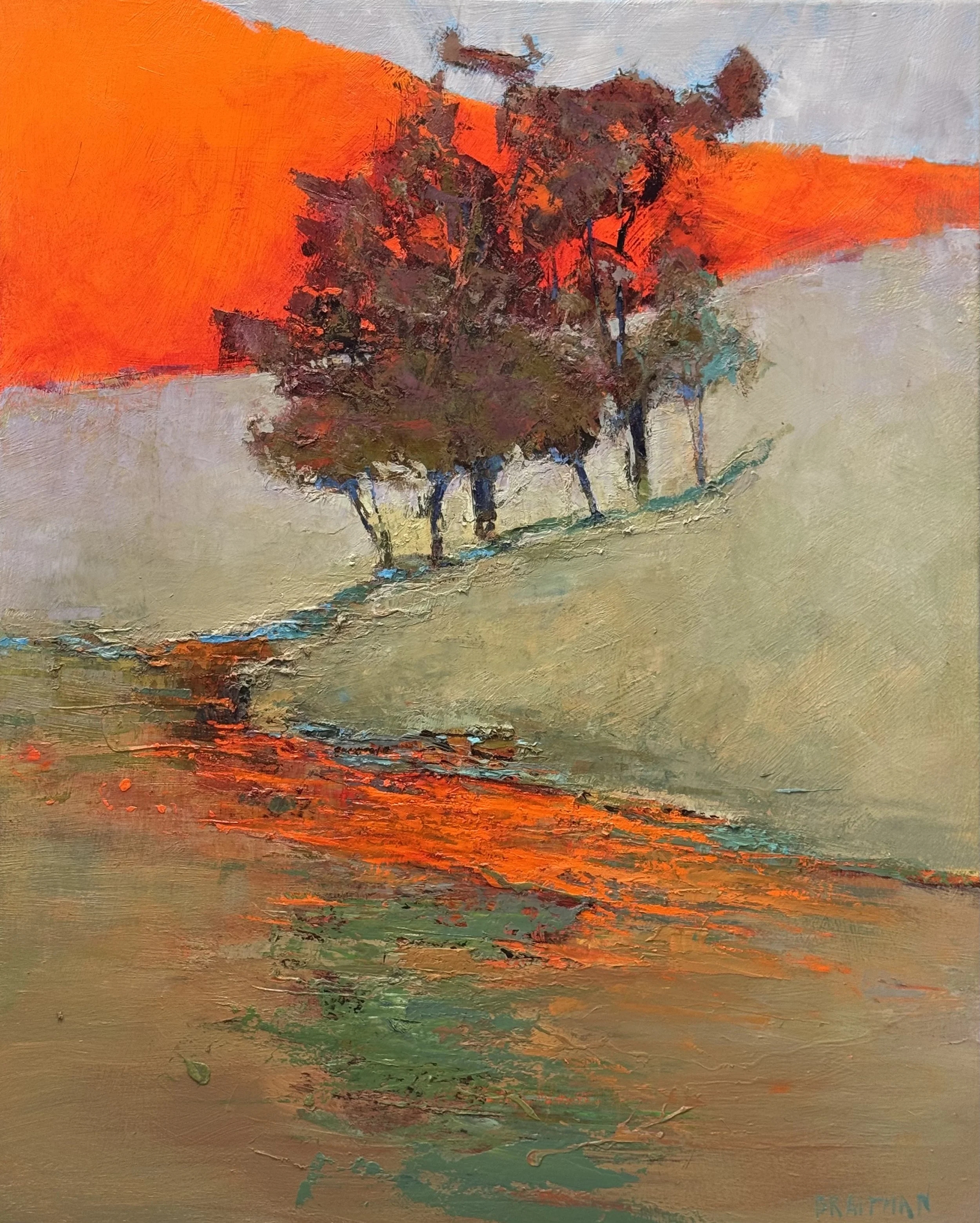
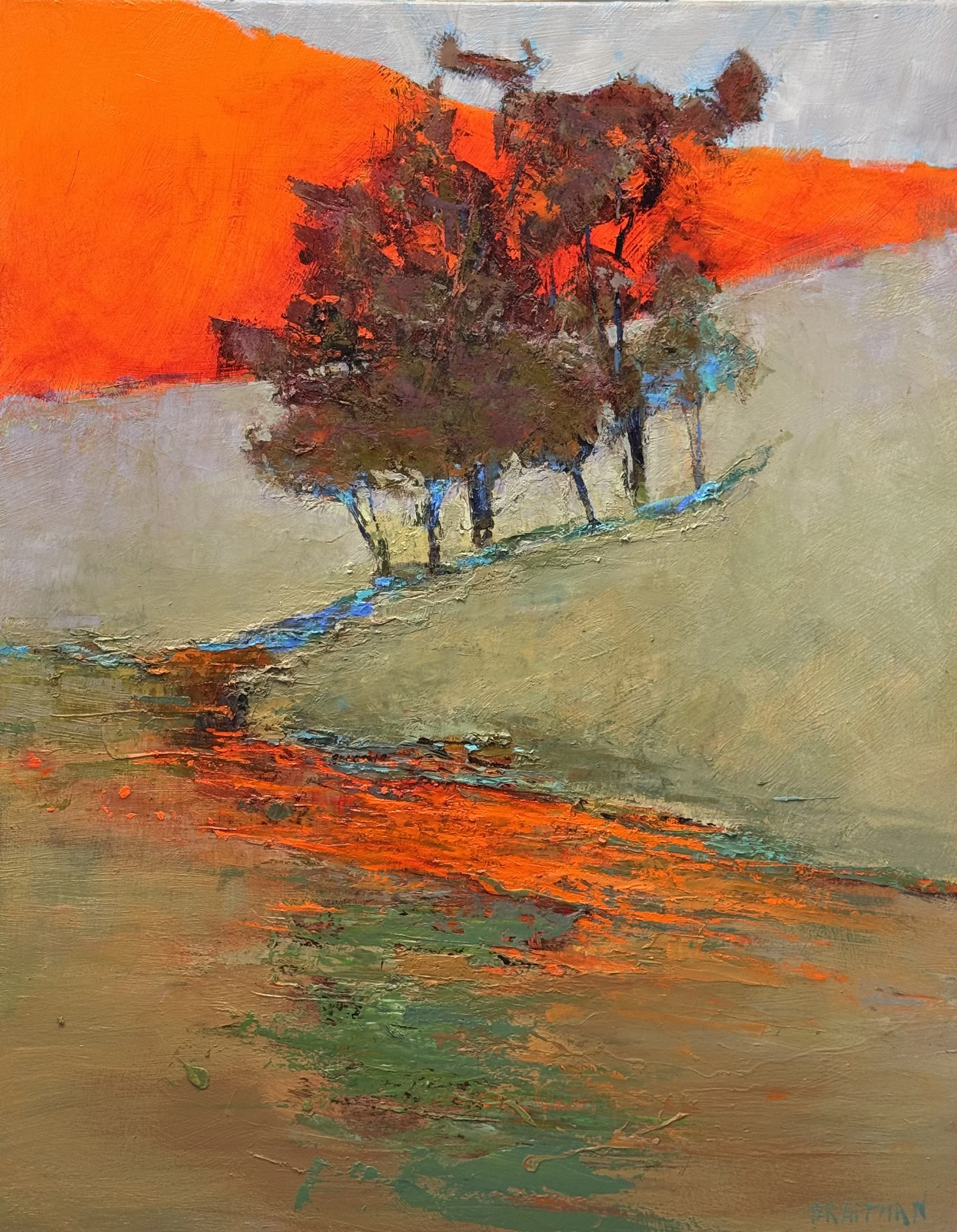
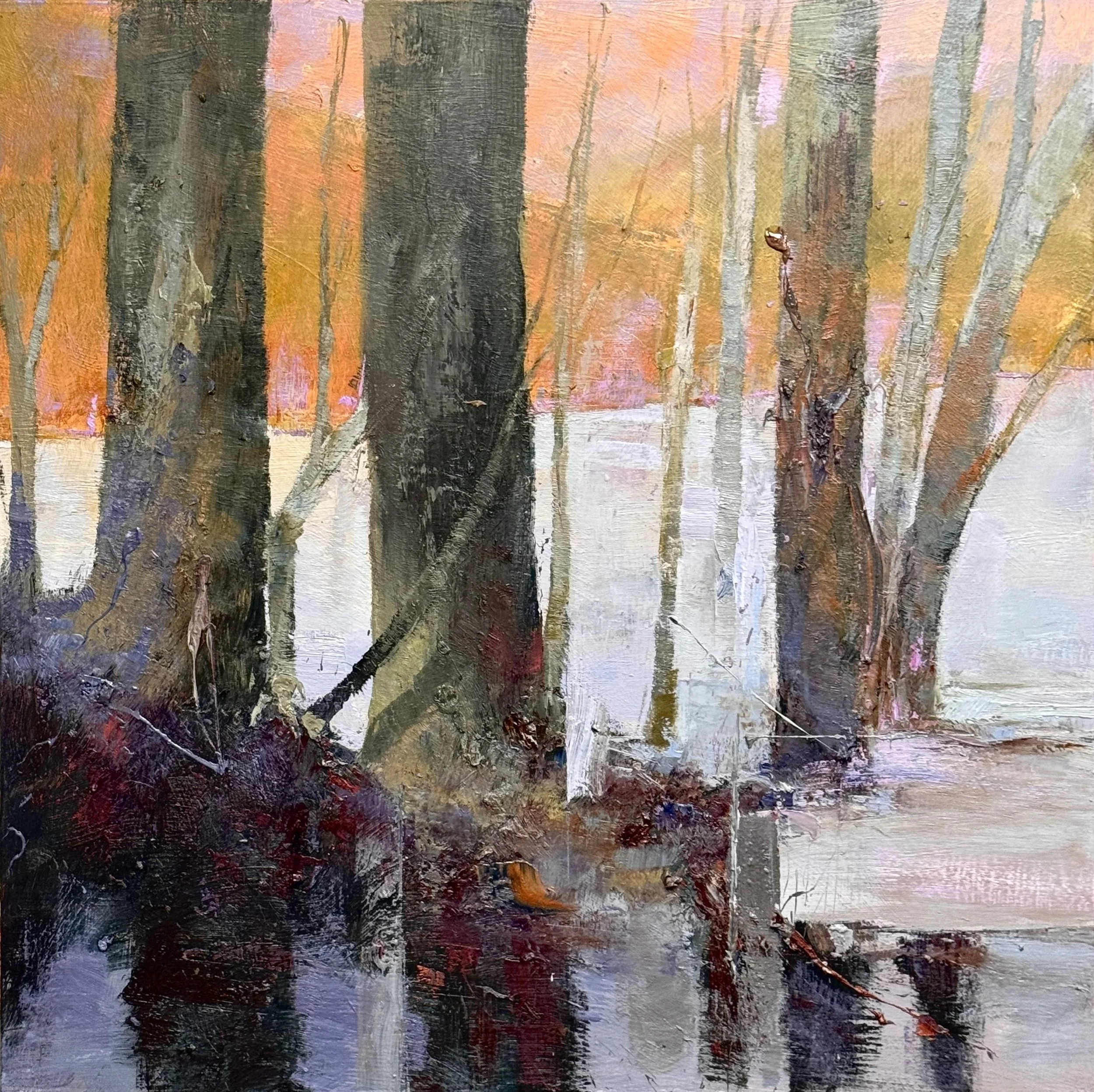
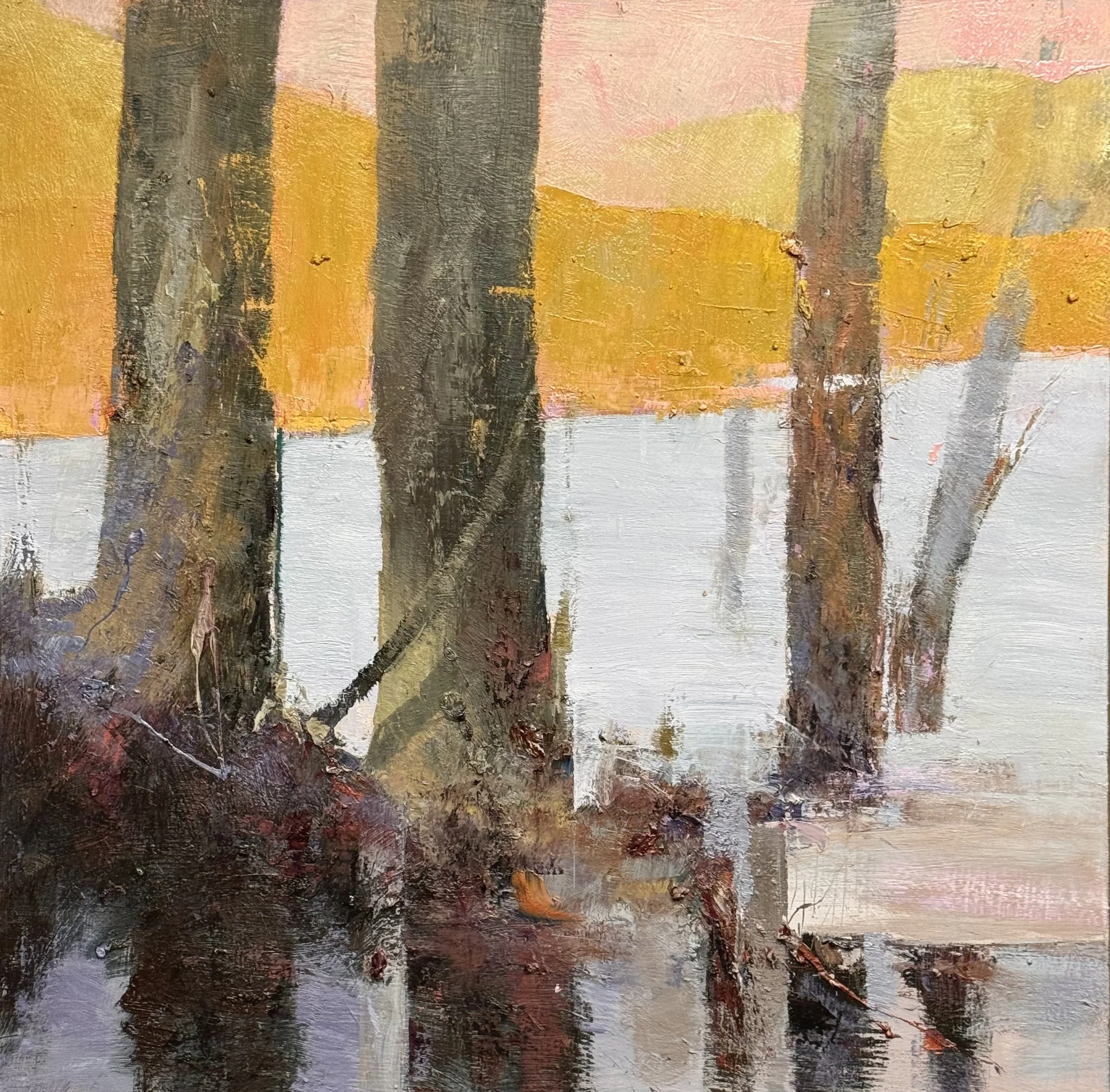
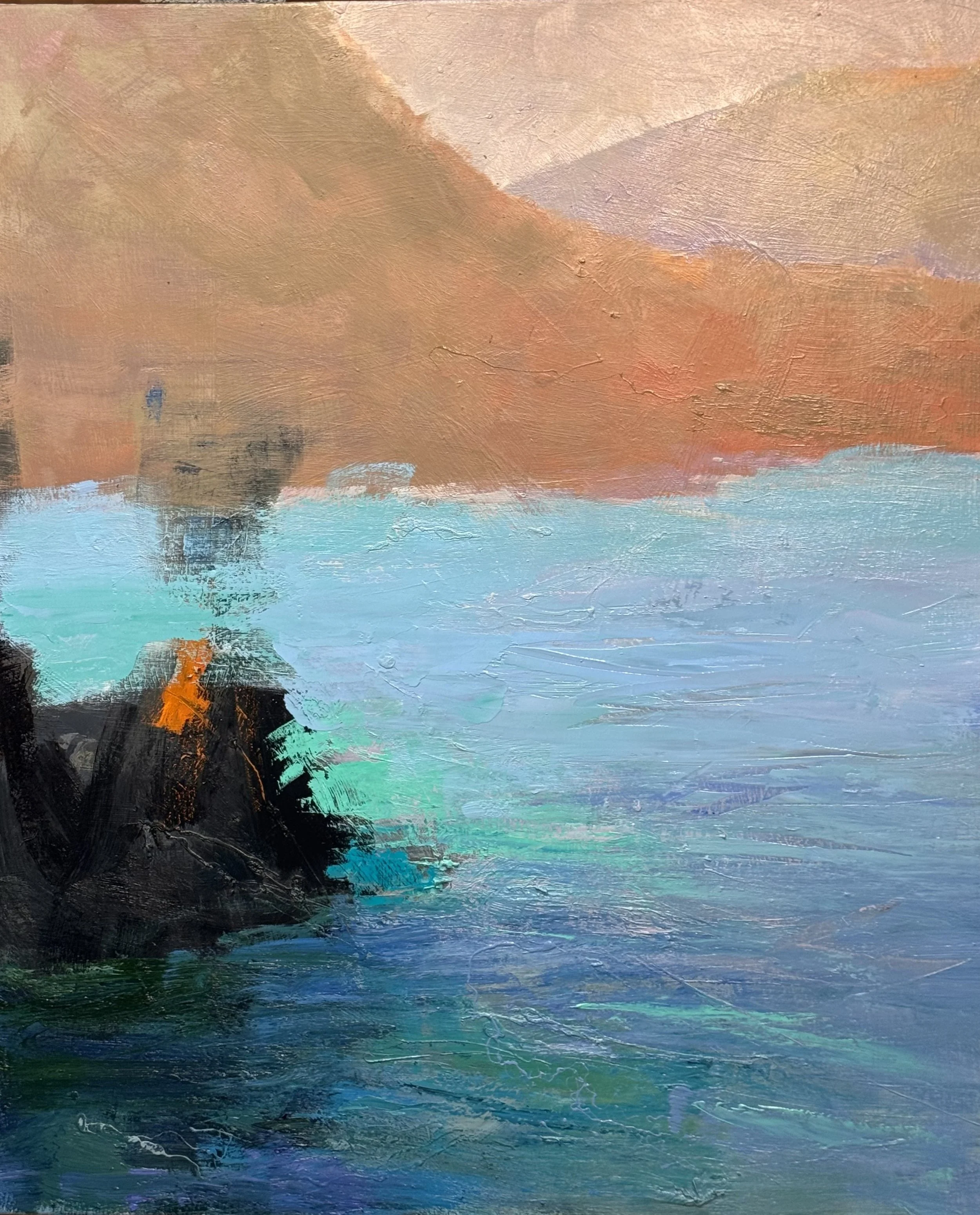
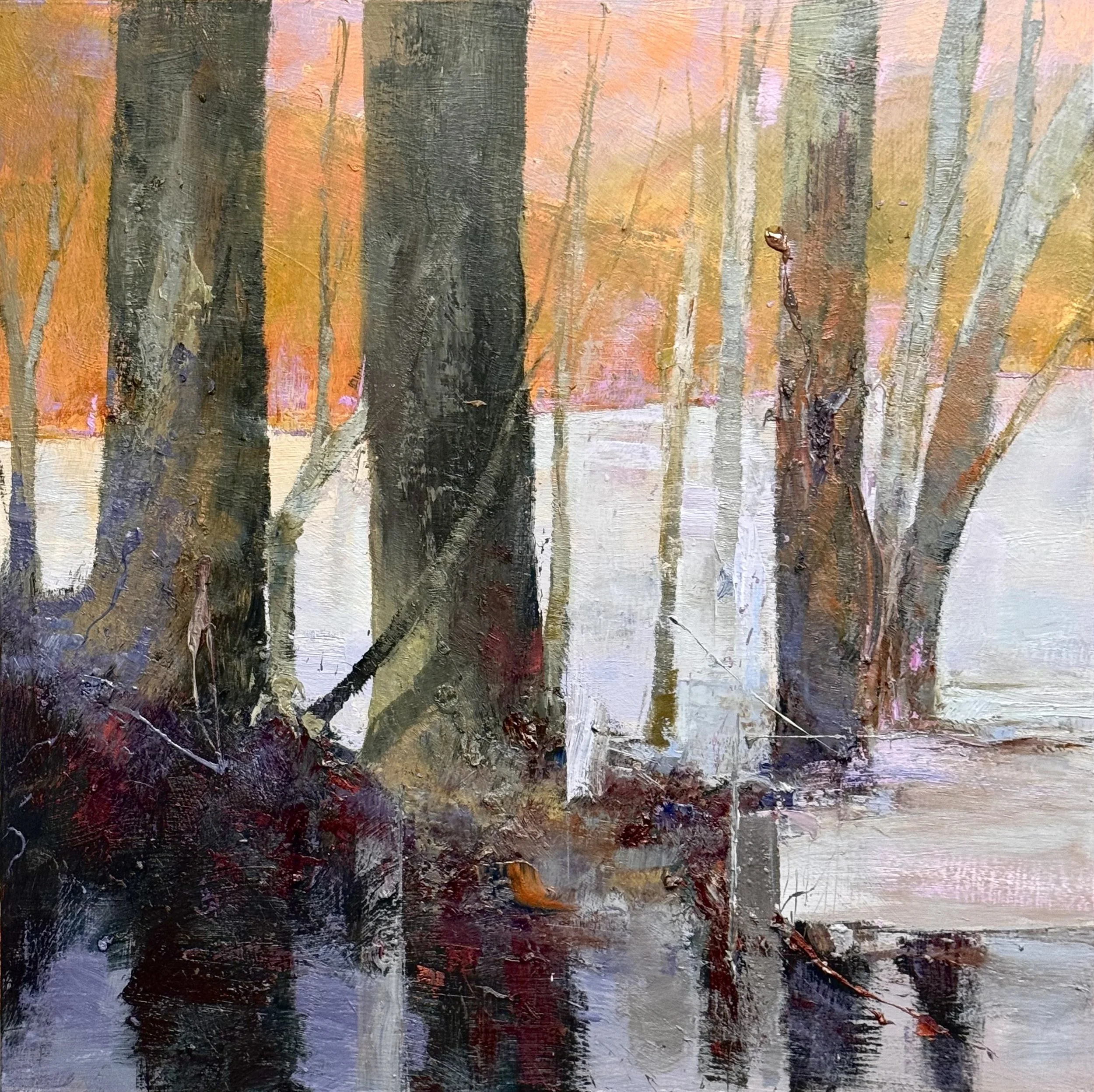
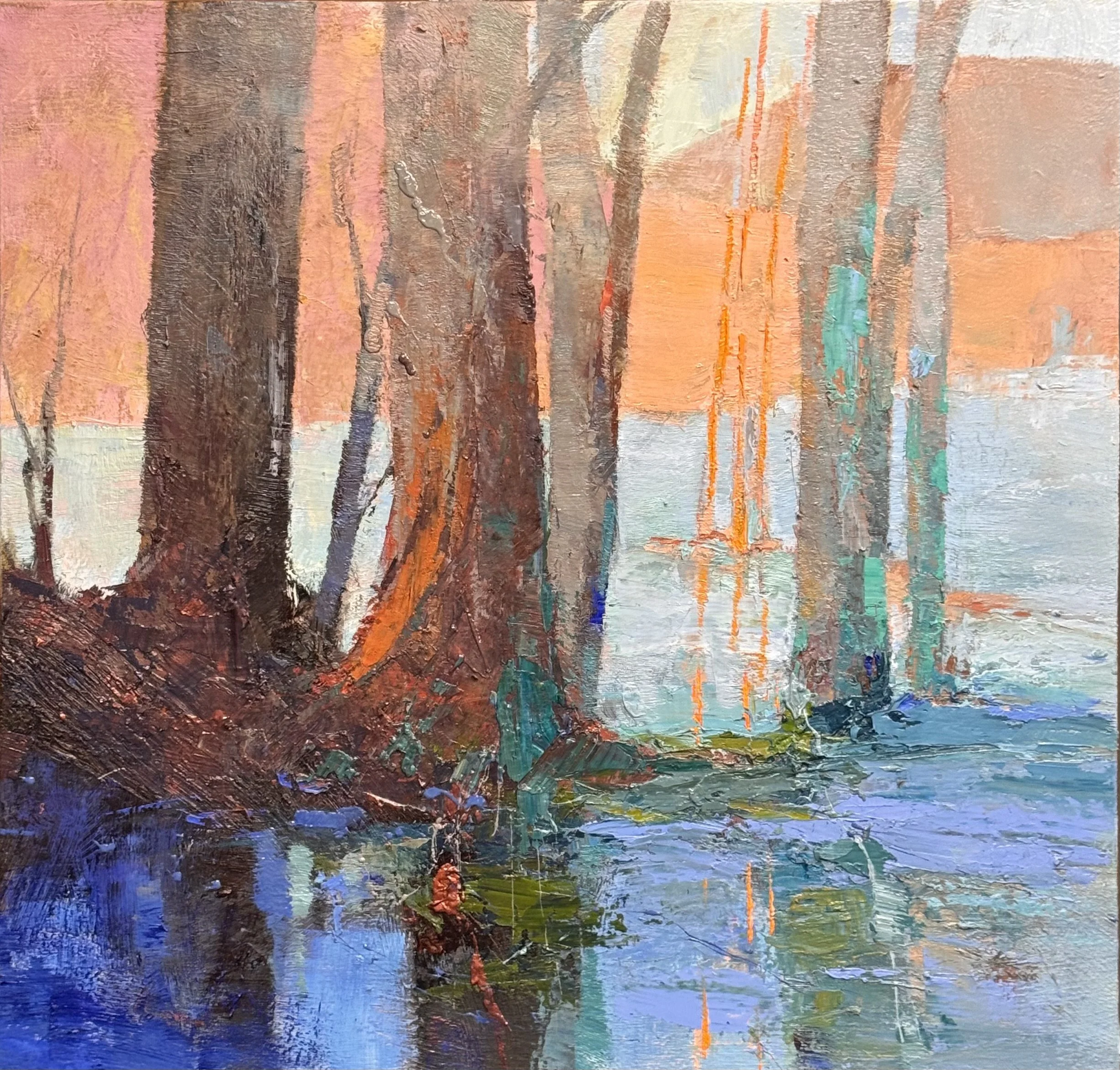
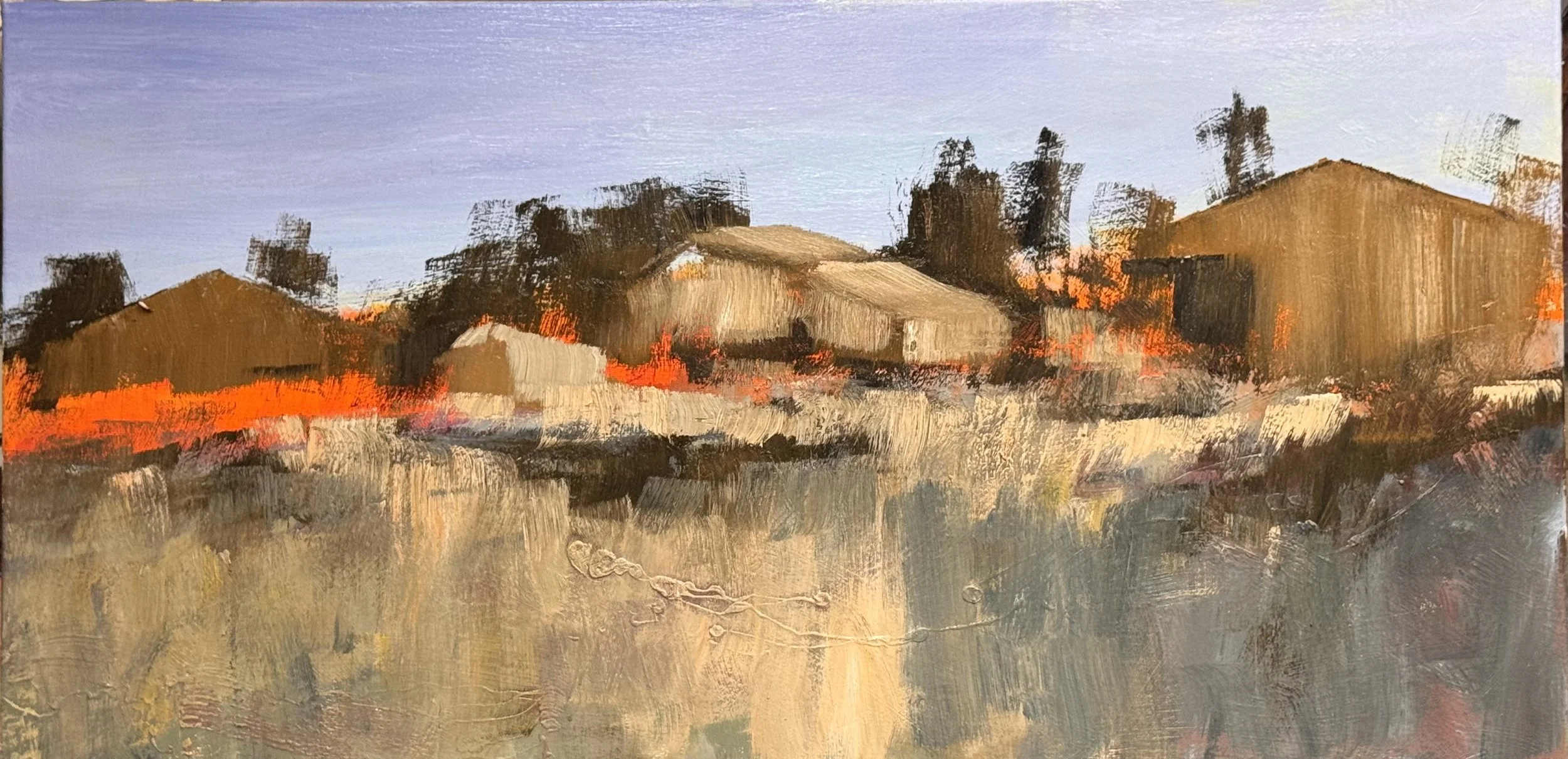
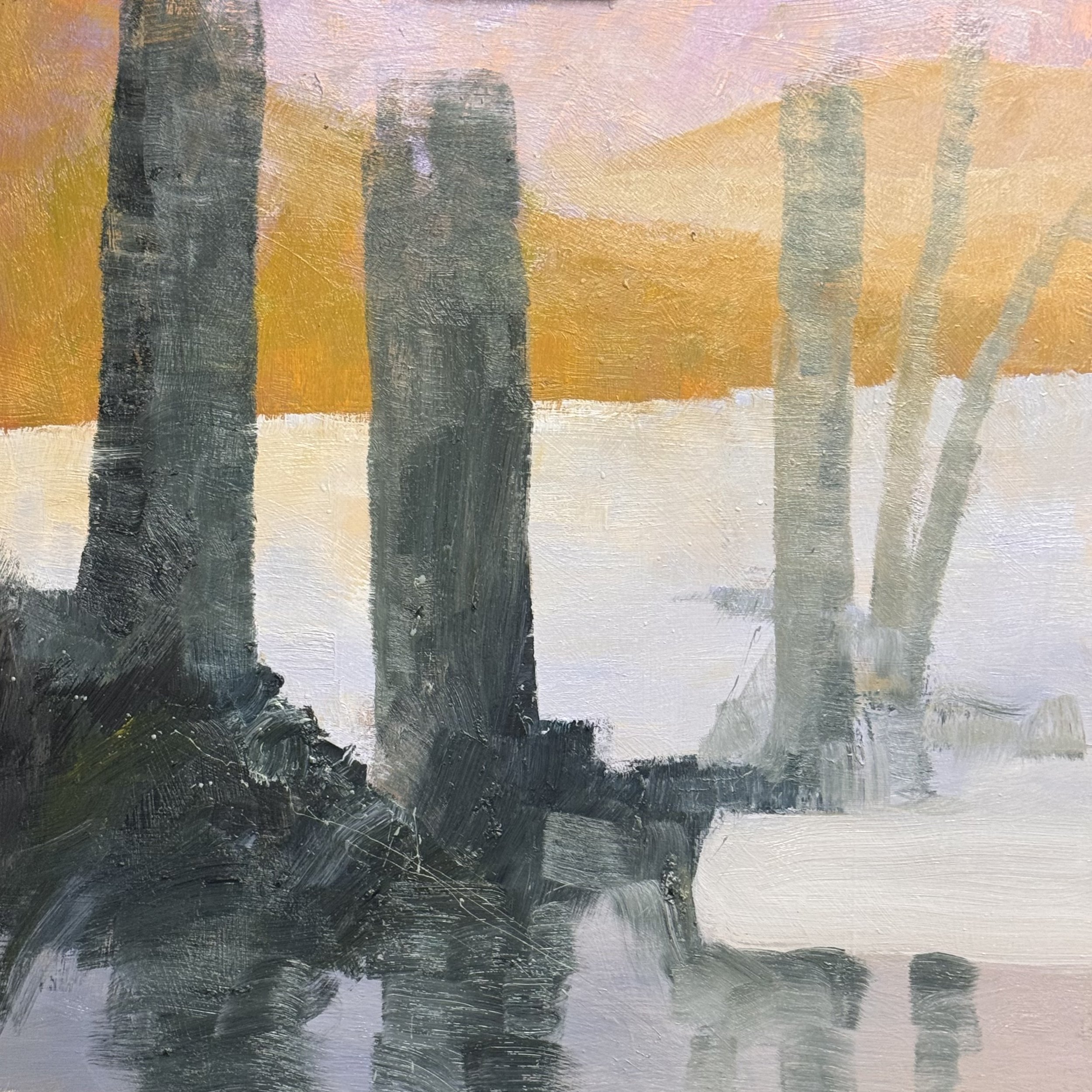
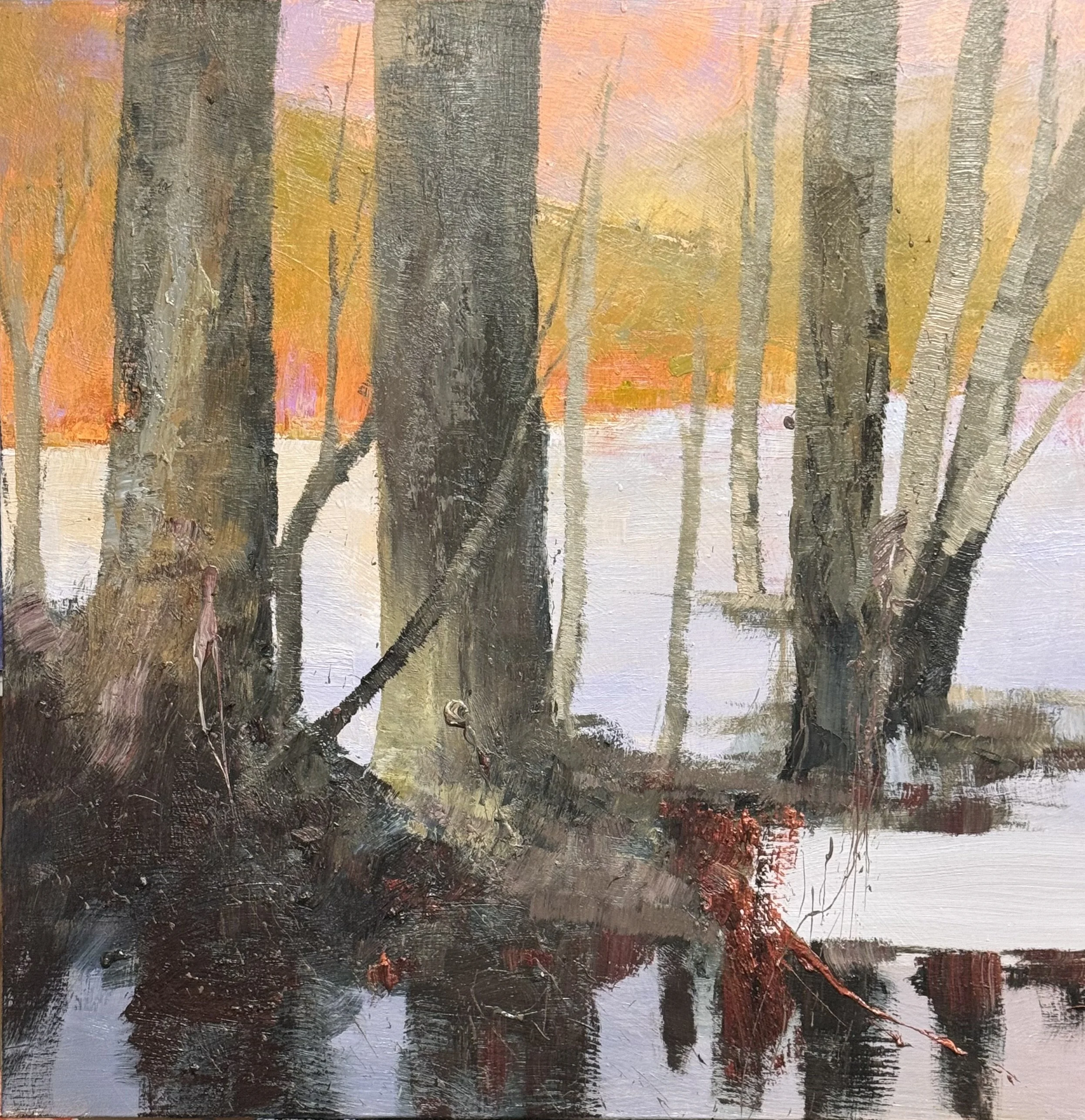
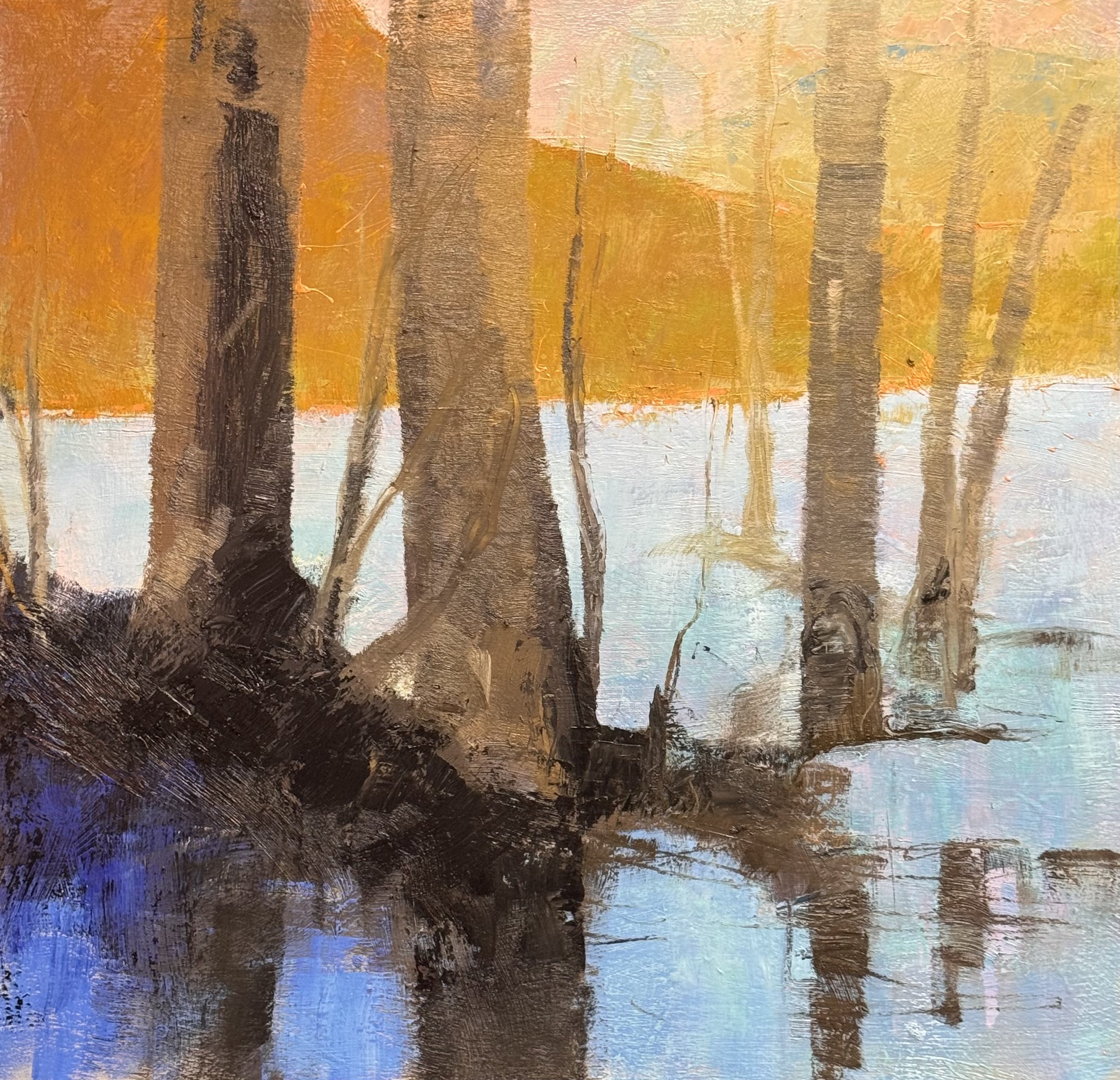
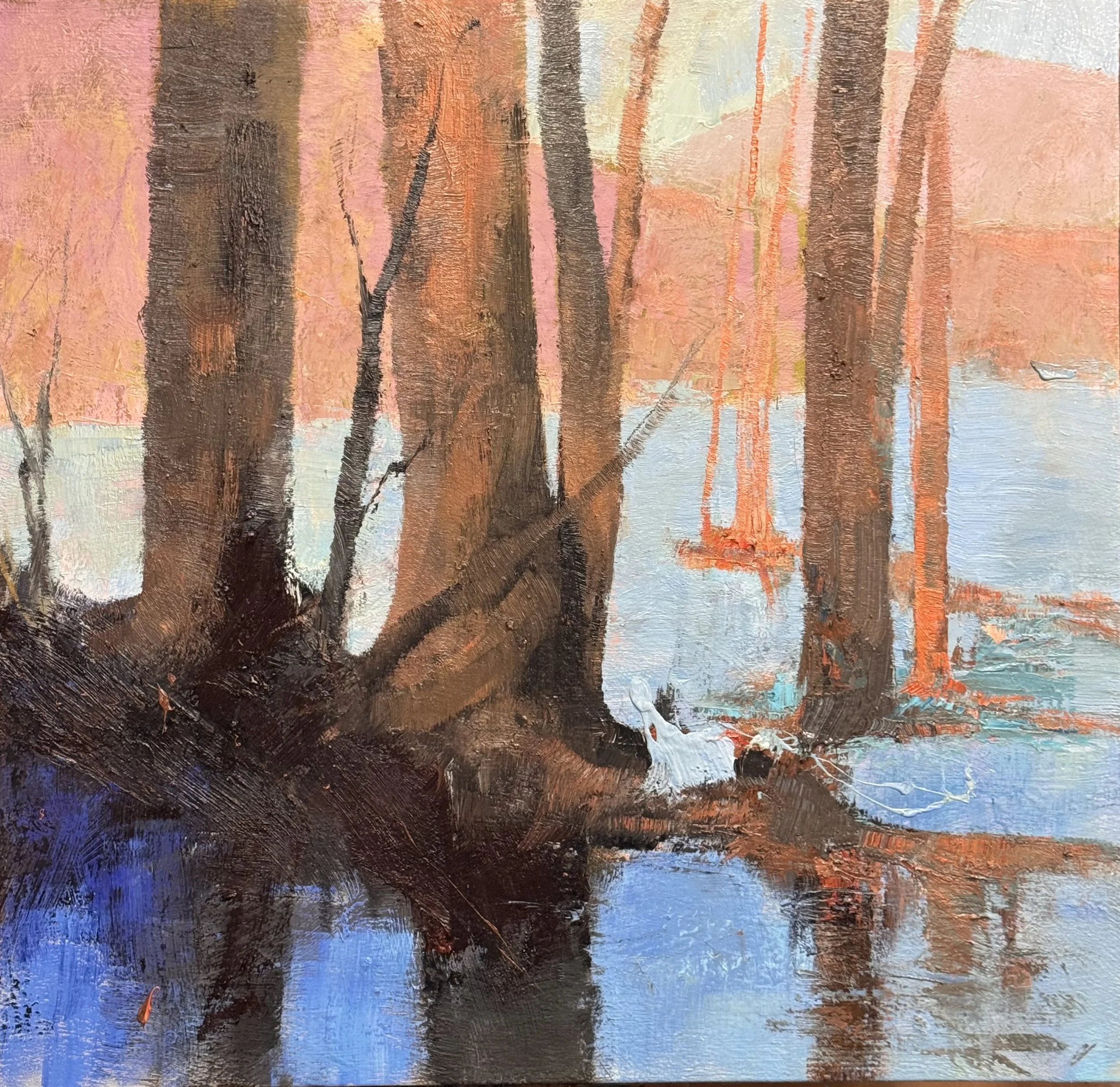
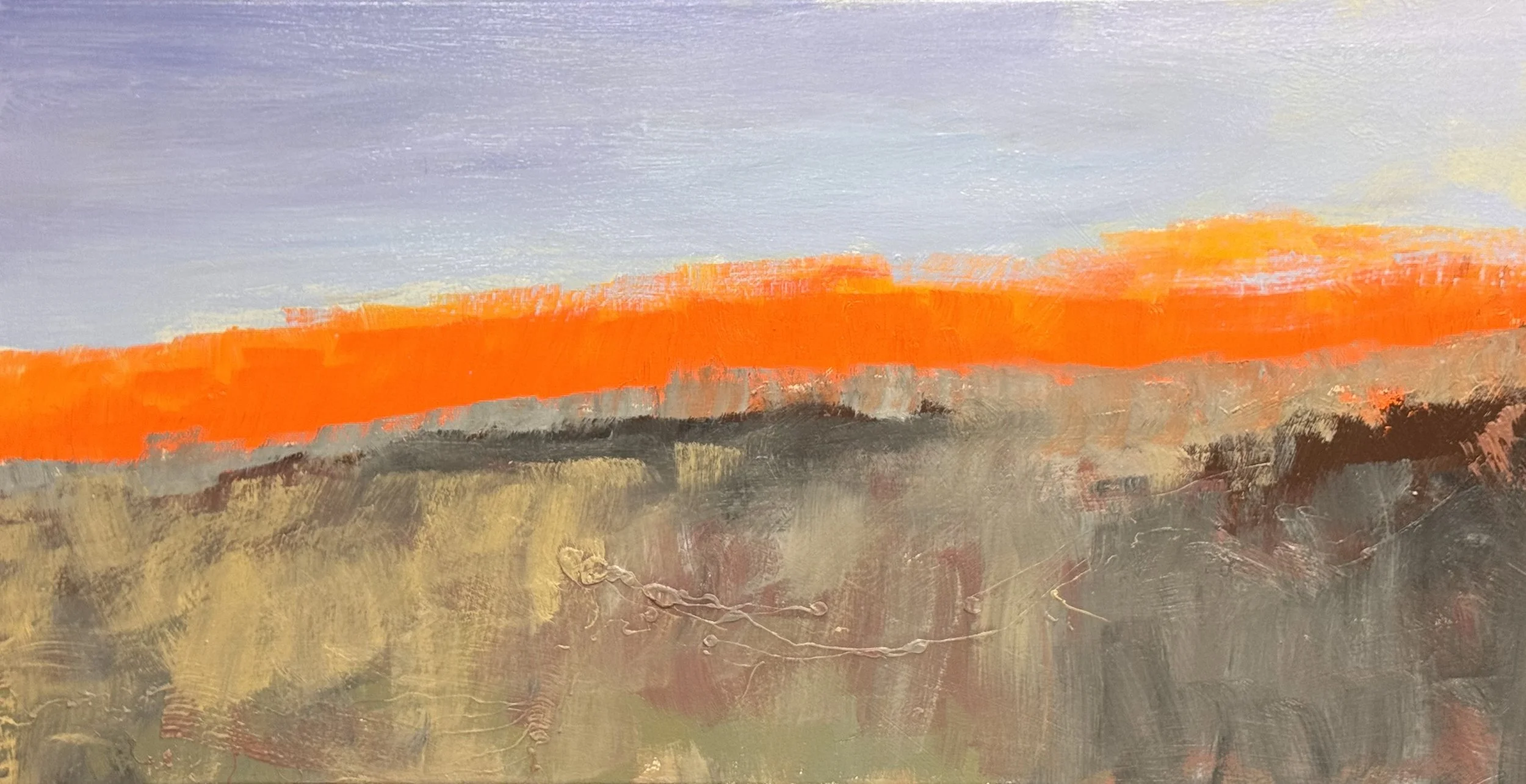
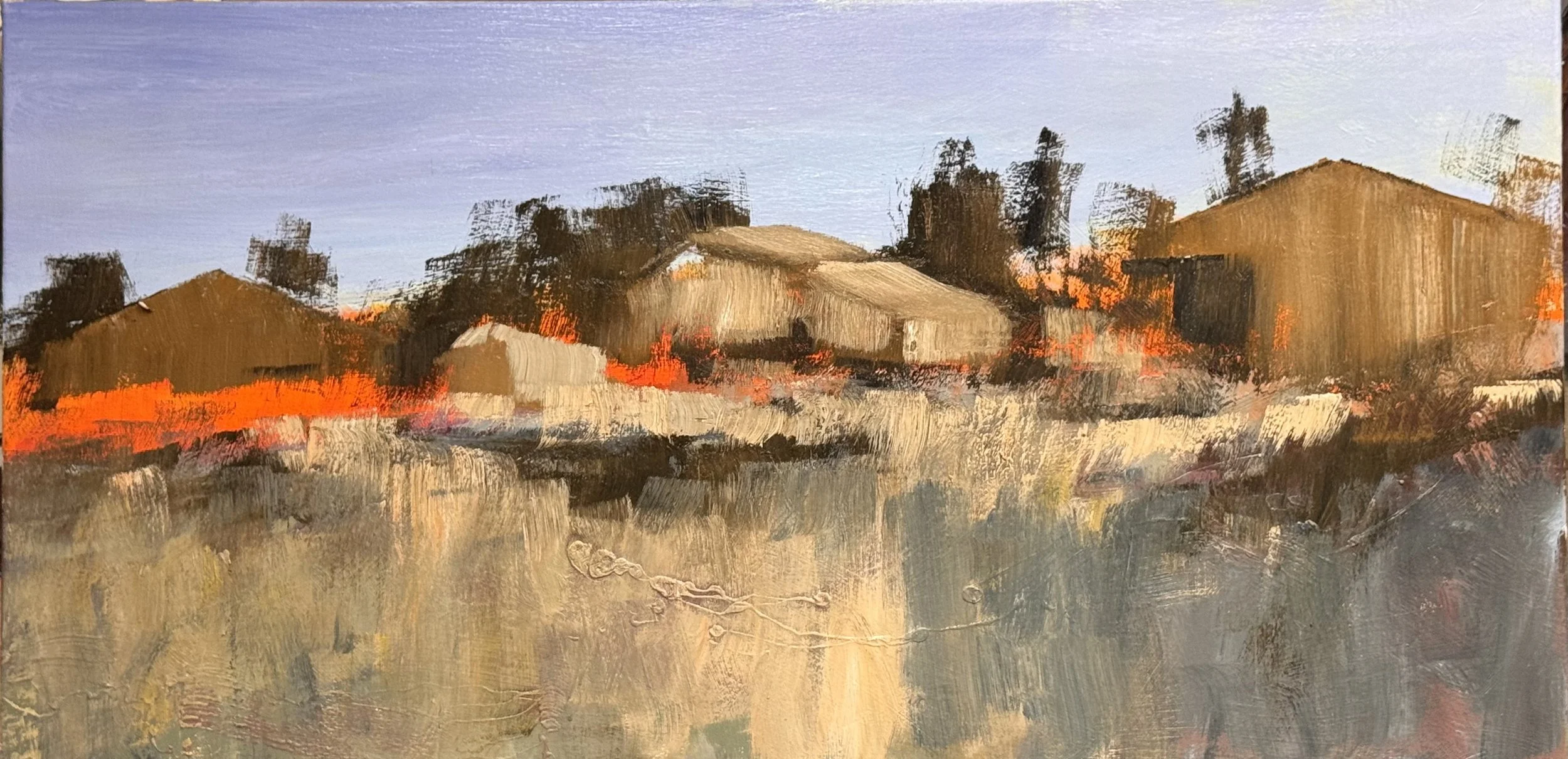
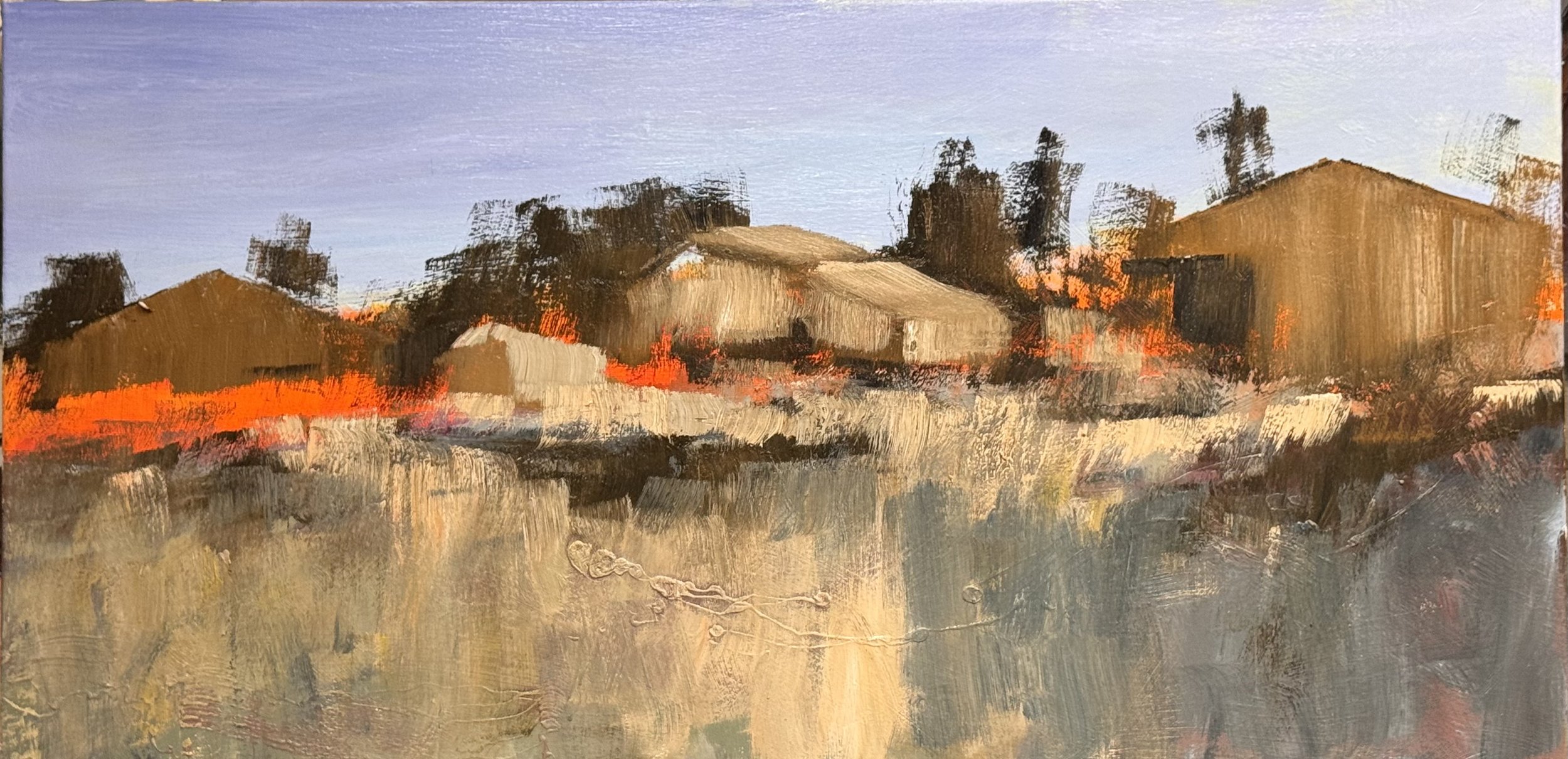
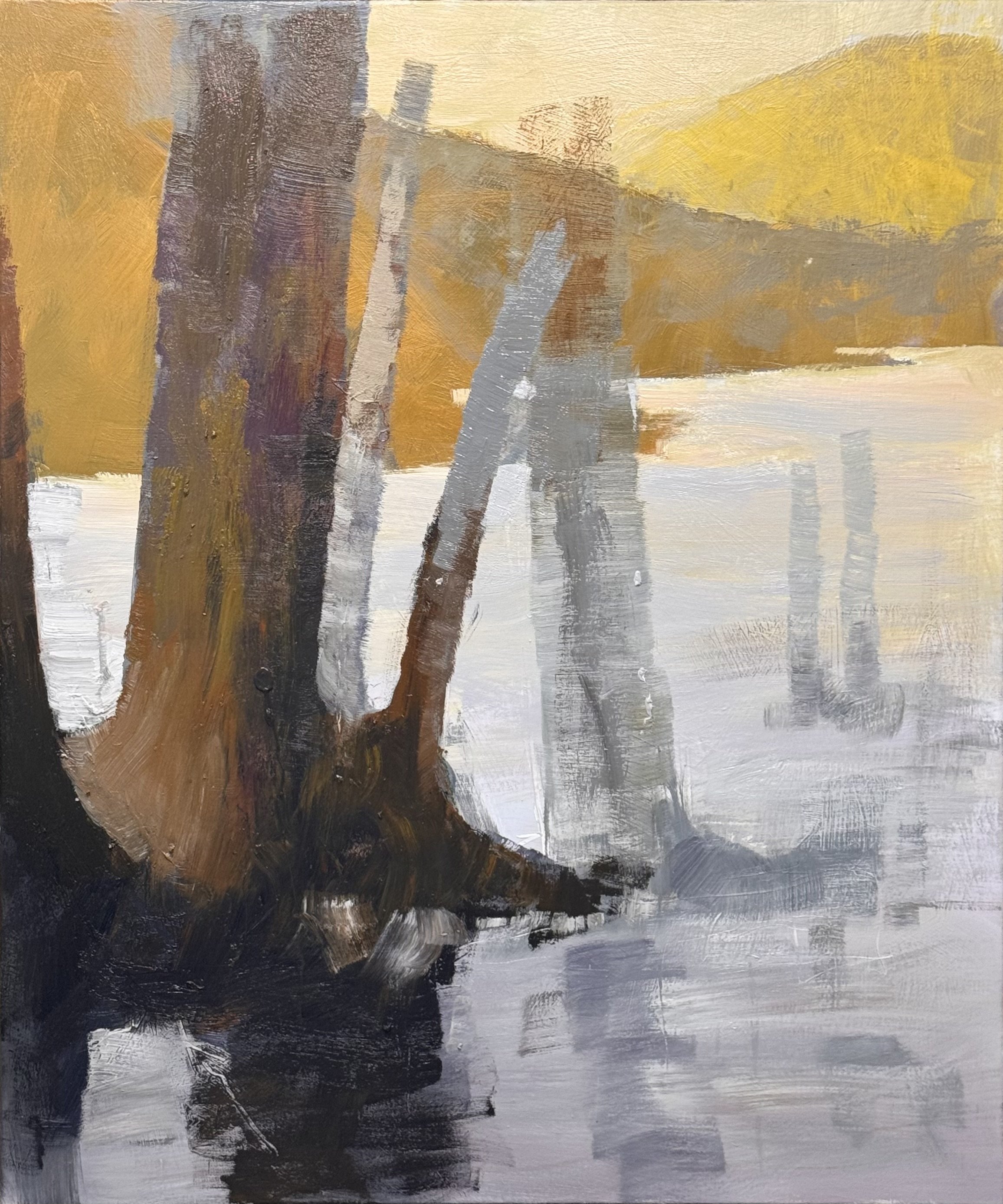
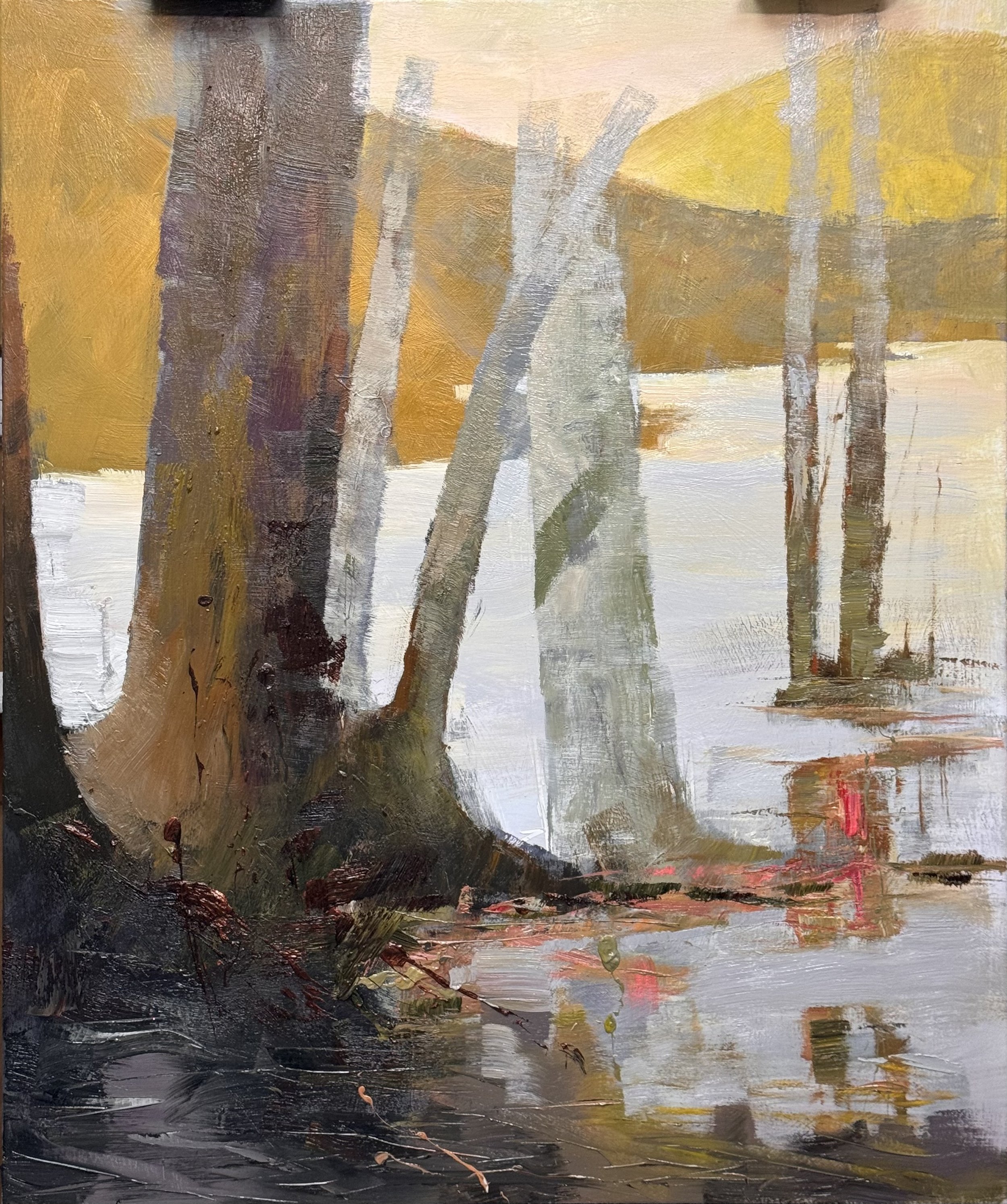
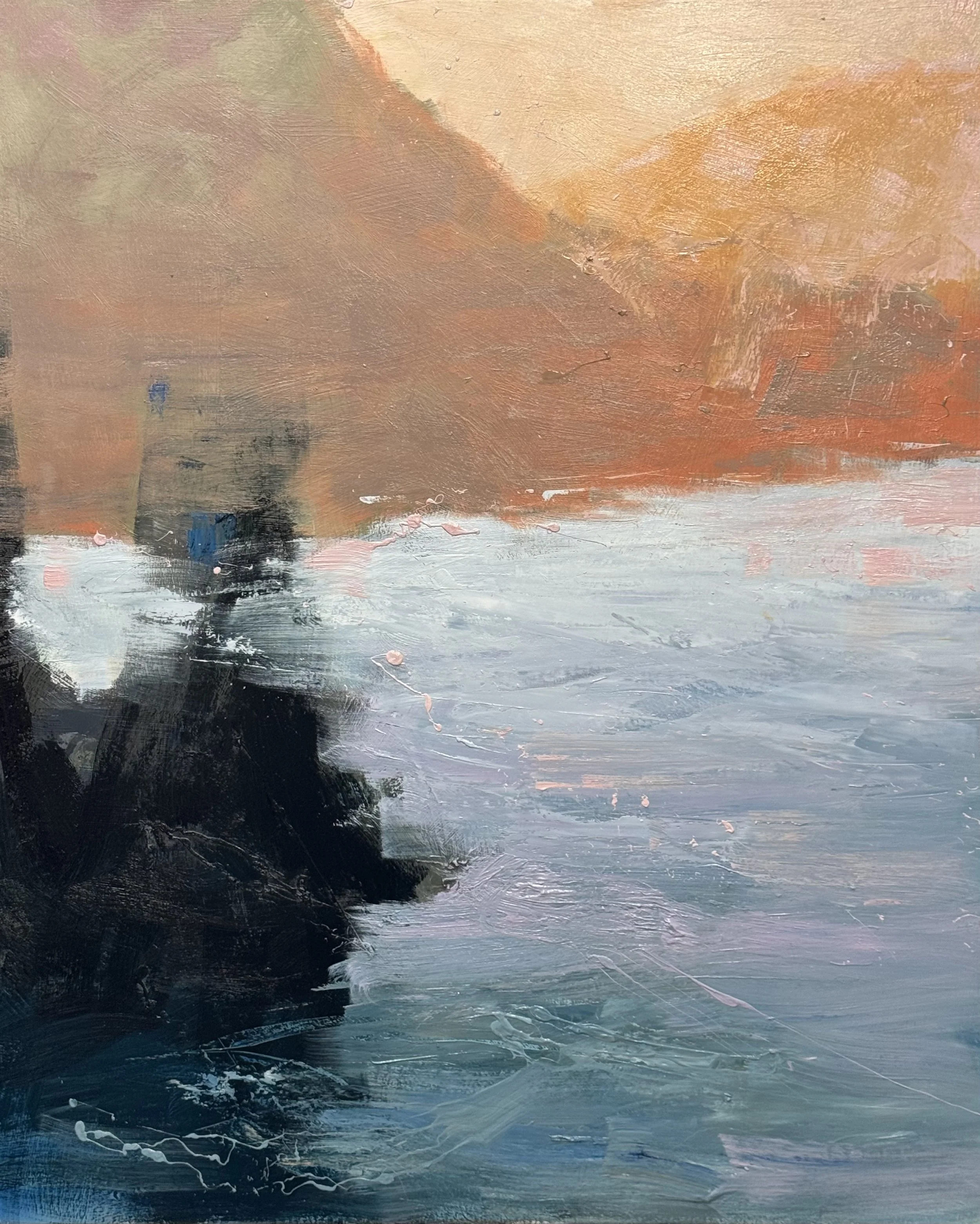
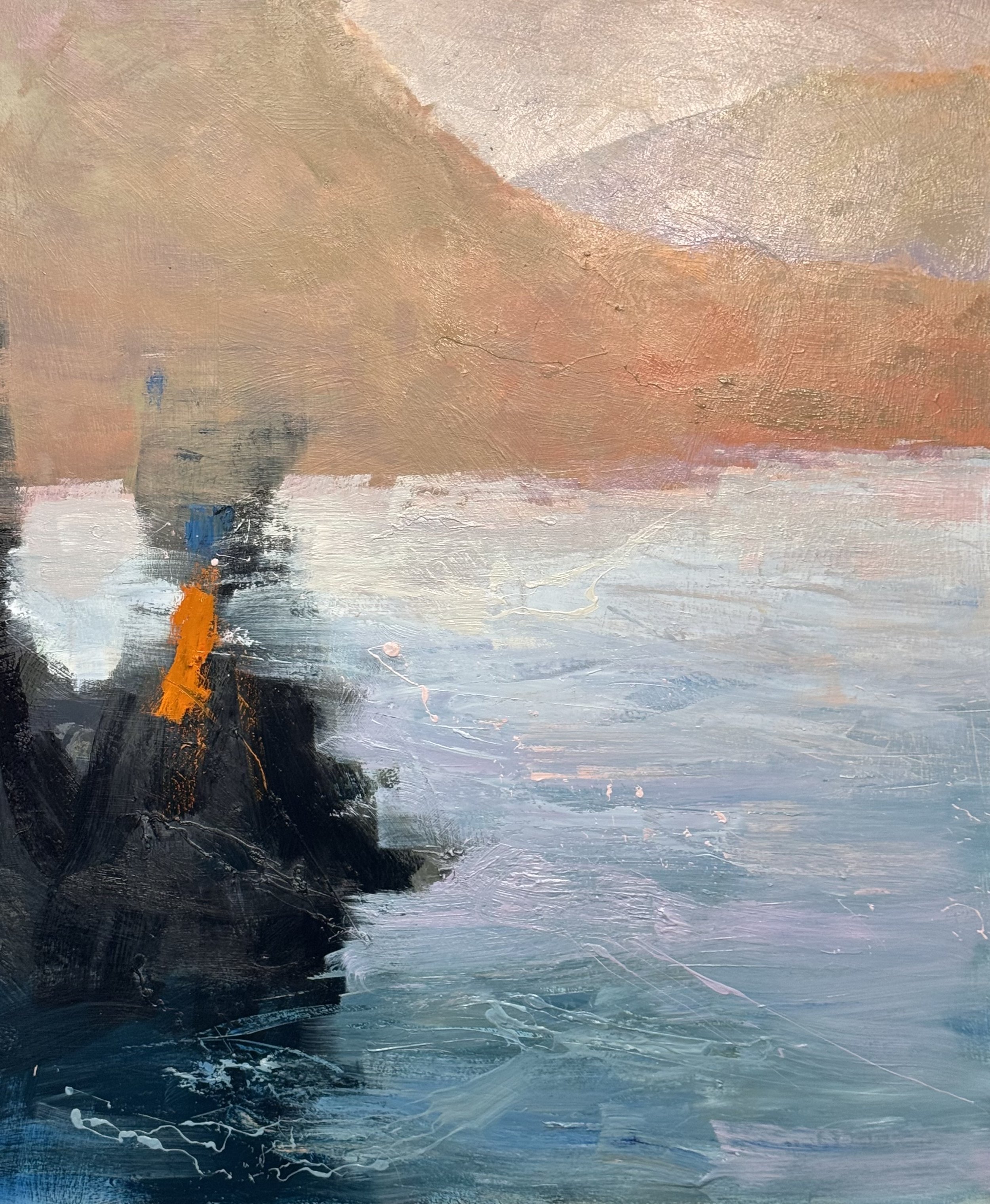
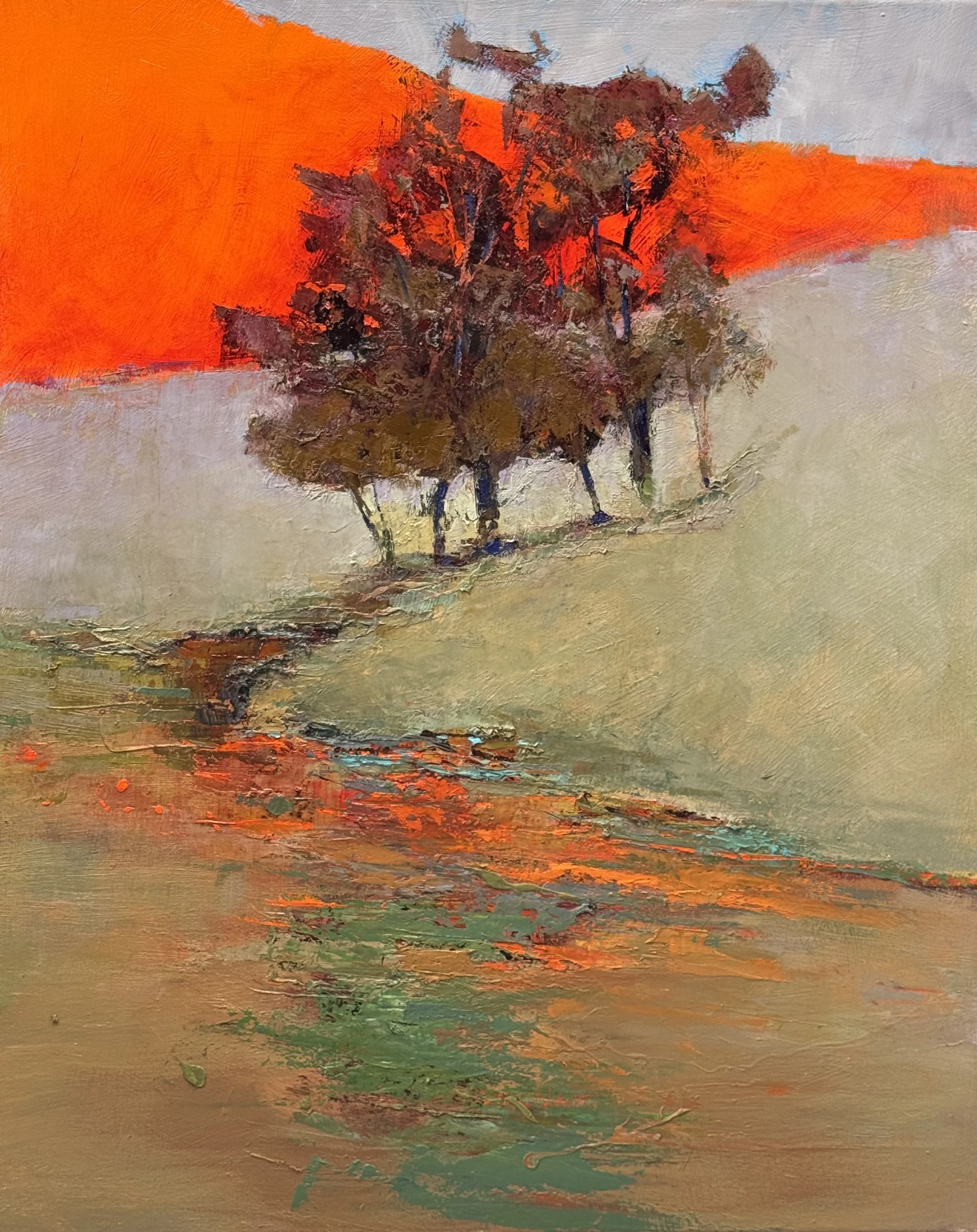
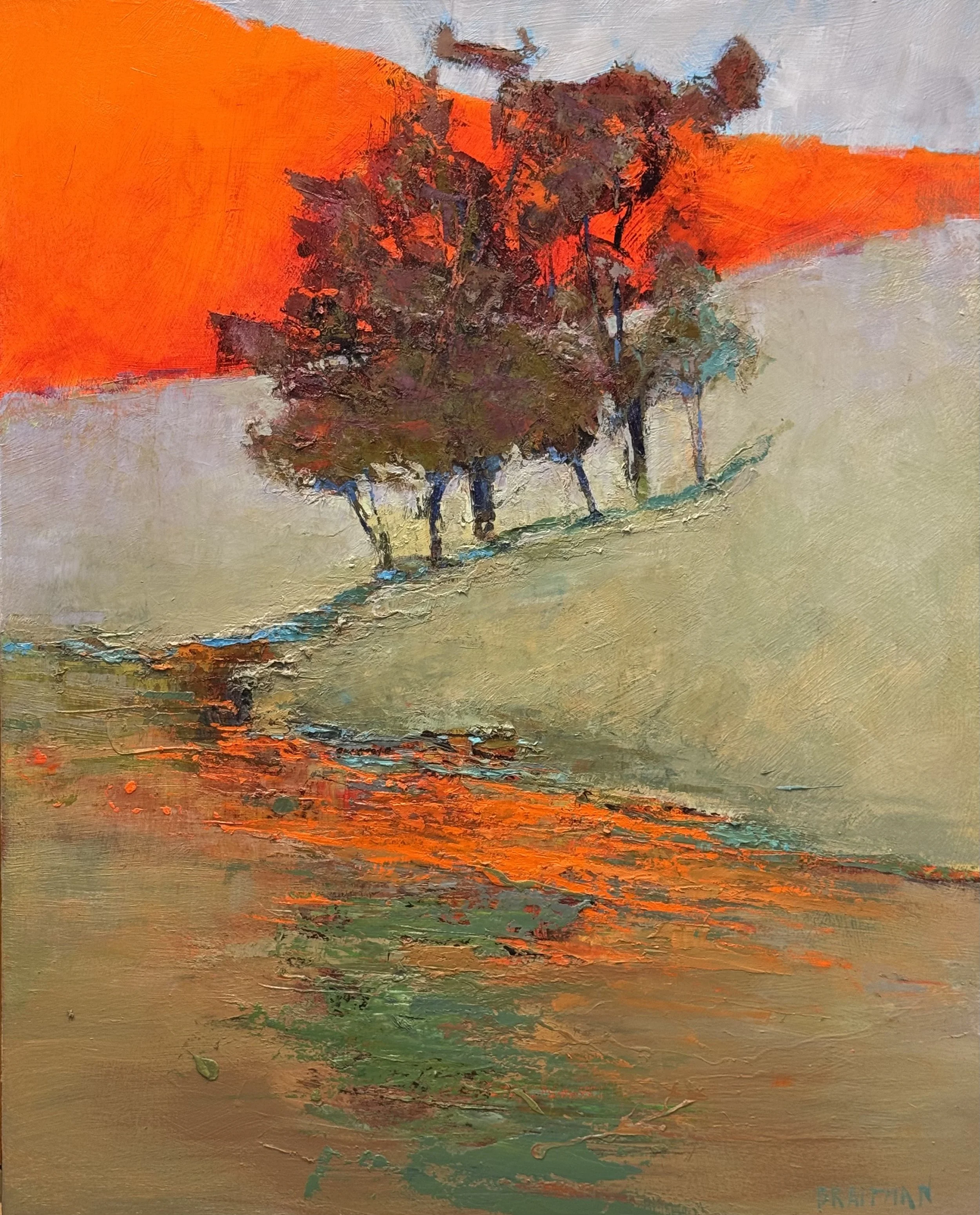
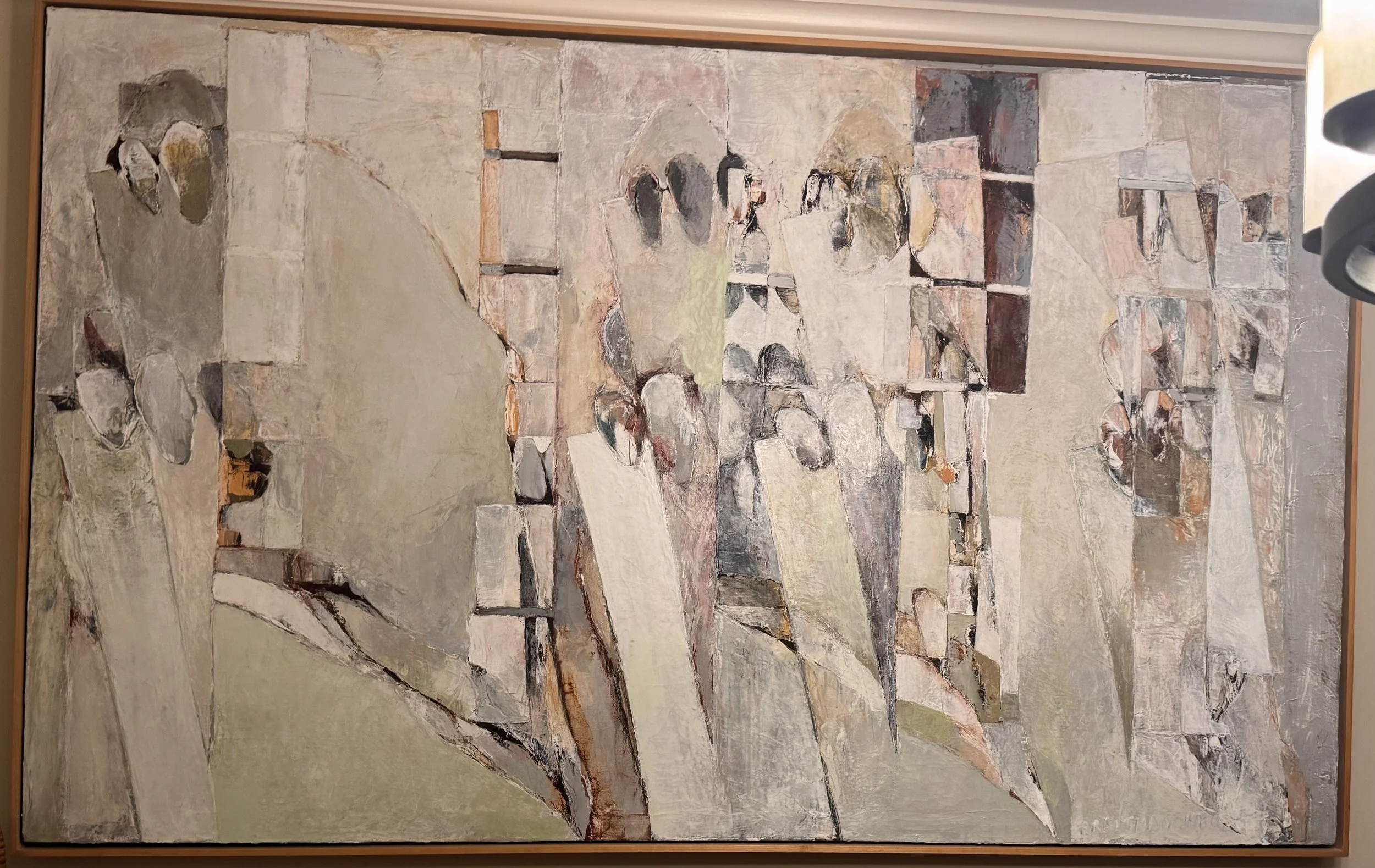
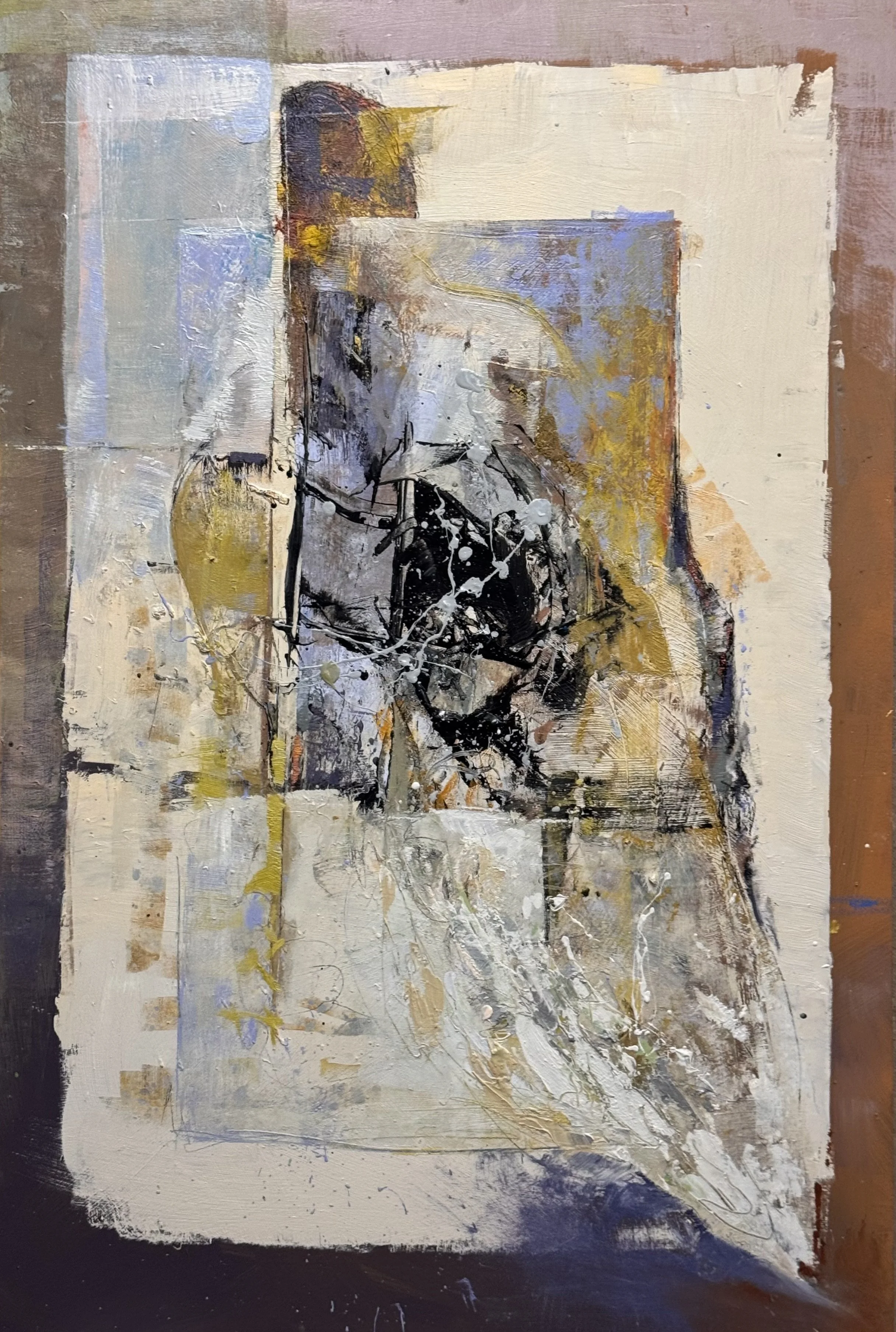
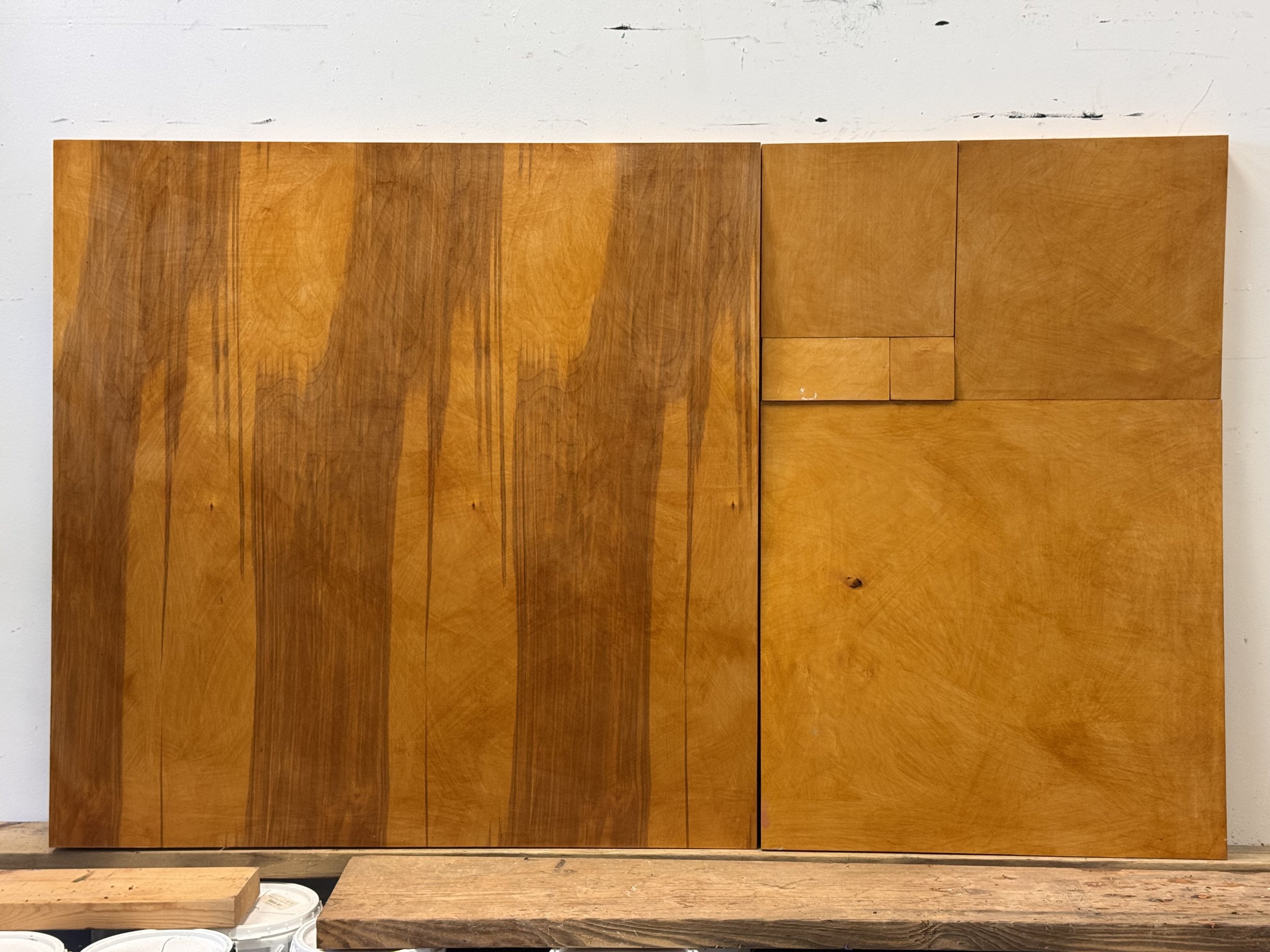
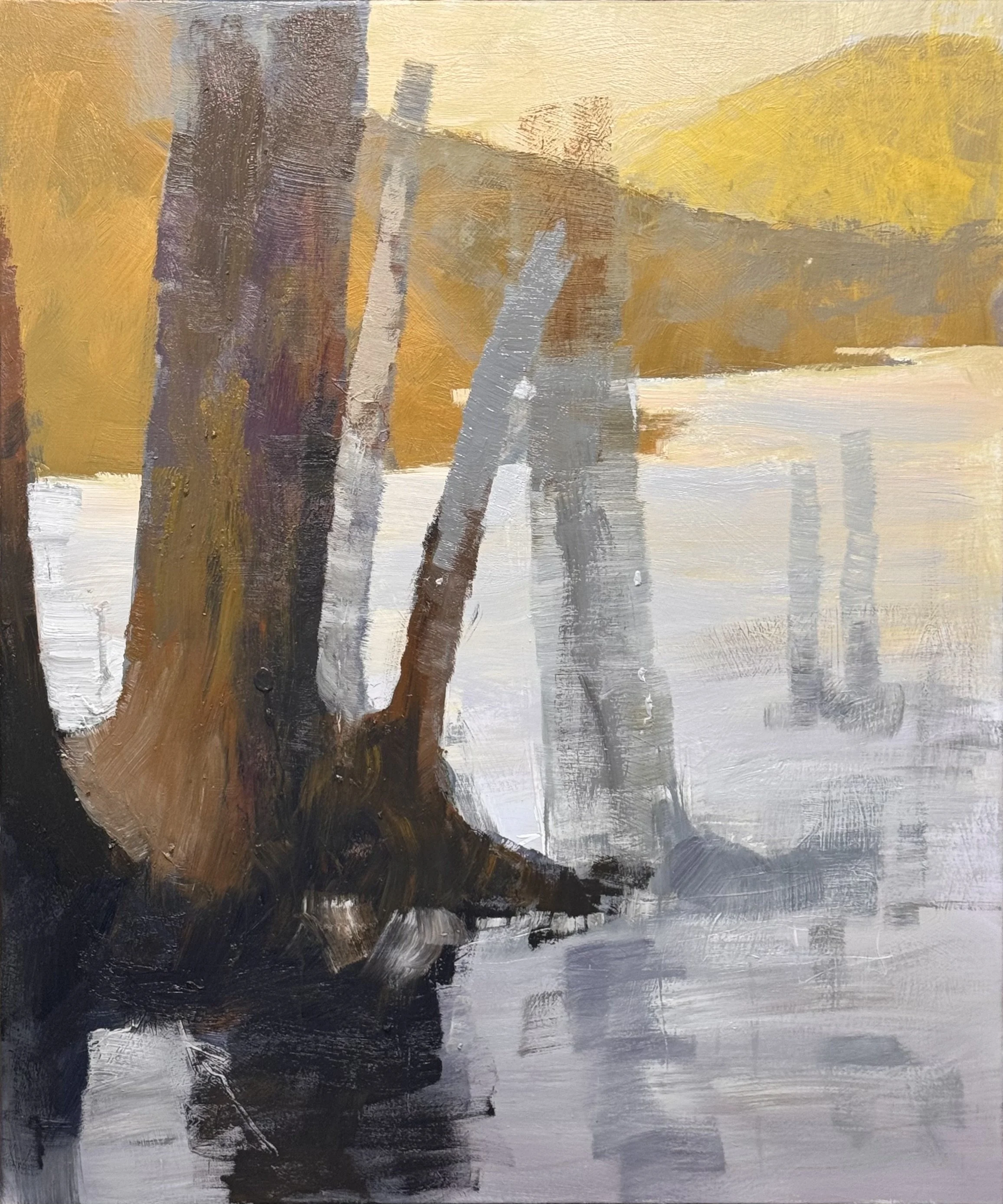
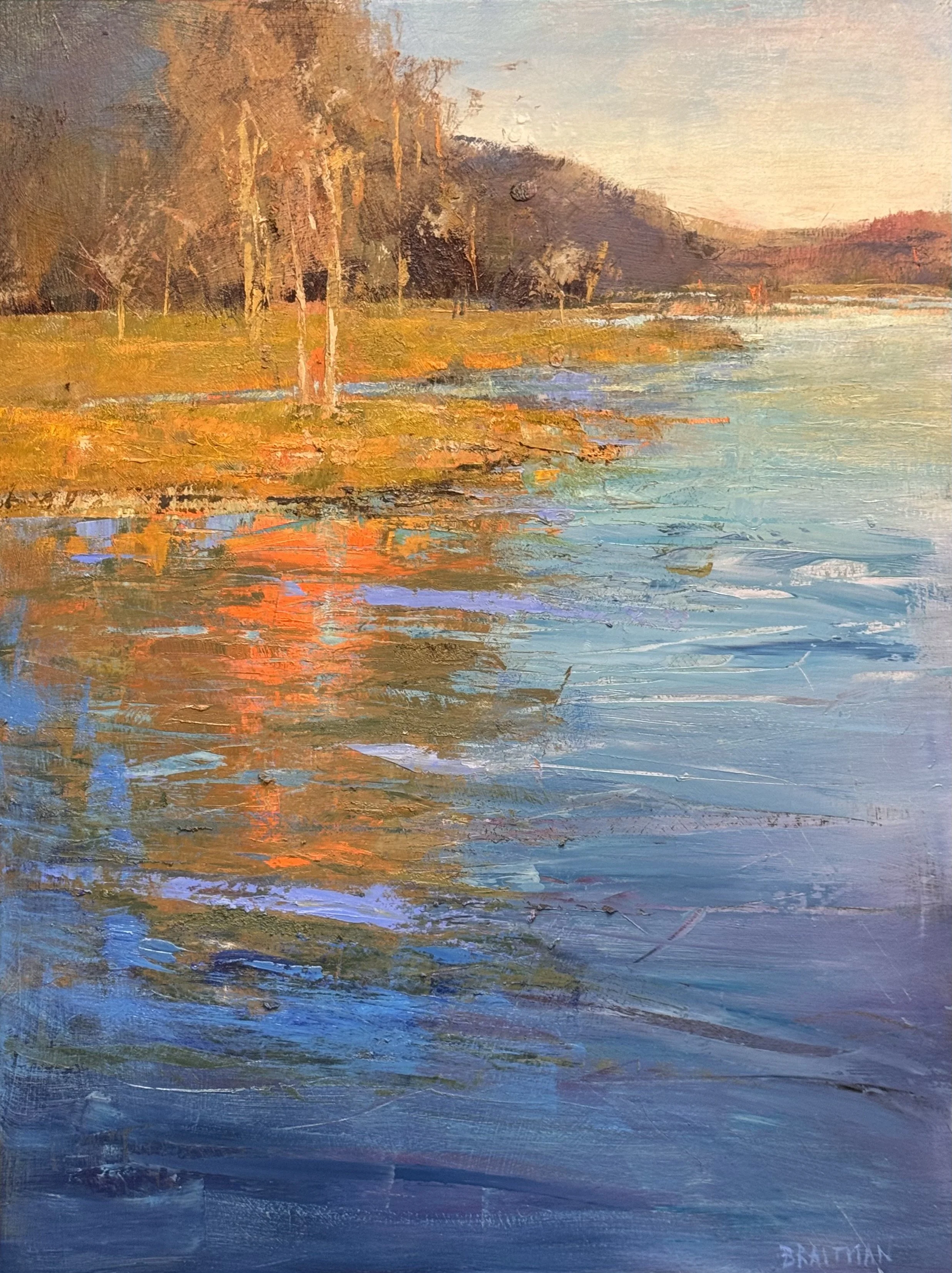
TREES: they are not even hinted at yet, the trees will be vertical teeth that hold the forground to the sky, push back the barns, and puctuate our eye movement across the scene
Vertical teeth. That's exactly right.
And the word punctuate is doing real work there — not decorate, not describe. Punctuate. They'll function the way commas and stops function in a sentence. They control the speed of the eye. Where they're dense, the eye slows. Where there's a gap, the eye moves through fast and finds the barn, finds the orange, finds the next trunk.
The barns get pushed back the moment the first dark vertical hits the foreground plane. That's the payoff of the scale argument — a single trunk in the foreground outweighs the entire barn cluster in visual mass, and suddenly the barns are where they belong: behind, interior, discovered rather than announced.
And the sky connection is what makes them teeth rather than posts. A post sits on the ground. A tooth bites in both directions — it grips the foreground earth and it punctures the lavender sky simultaneously. The dark tree masses behind the barns already did this but softly, with edges that blurred into the sky. The foreground verticals will do it hard. Sharp entry into that lavender.
What's unresolved right now is spacing. The rhythm of the teeth — irregular, like actual trees, with breathing room between — will determine everything about how the eye moves. Too regular and it becomes a fence. Too random and the punctuation loses its grammar.