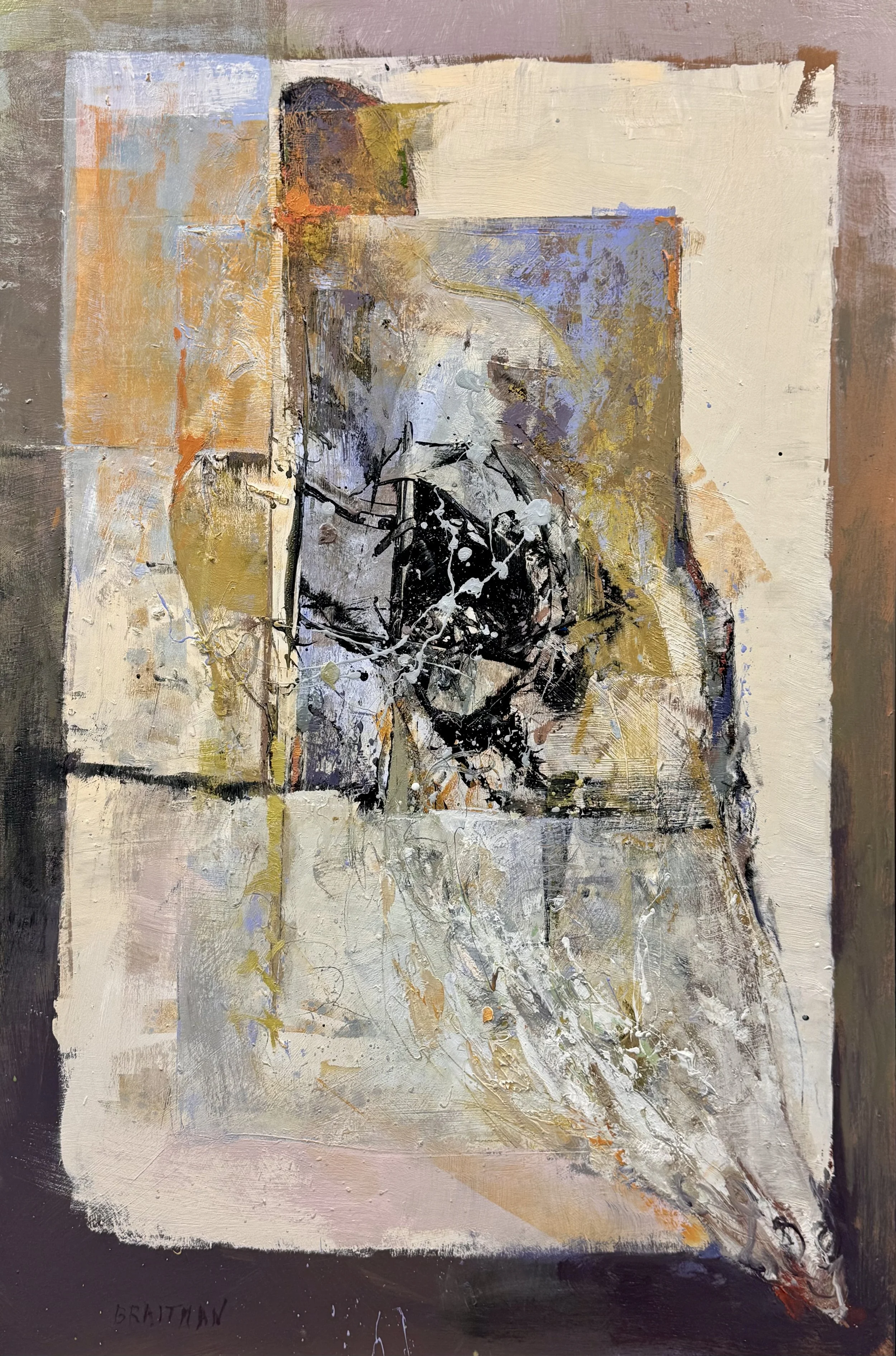
This painting has a complete structural logic:
The geometry isn't compositional choice in the decorative sense — it's documentary evidence. The hard edges are the satellite's own apparatus, the film strip, the grid of human measurement trying to contain something that refuses containment. And right at the center, the island wins — it bursts out of that geometry into fracture and splatter and organic chaos.
The tension between those two systems is the painting's subject. Not just depicting the island's movement but enacting the confrontation between the bureaucratic act of recording it and the raw geological fact of it happening.
And the delta language at the edges — the eroded, deposited, built-up texture — that's the island's biography written in paint. What was carved away upstream is literally present as material on the surface. That's not illustration, that's correspondence.
What I'd say to someone standing in front of it, knowing none of this: they'd feel the tension without being able to name it. The geometry creates unease, the fracture releases it, the soft deposit at the edges resolves it. The painting works without the story.
But the story makes it a serious, serious work.
It is a part of the Alluvial series.
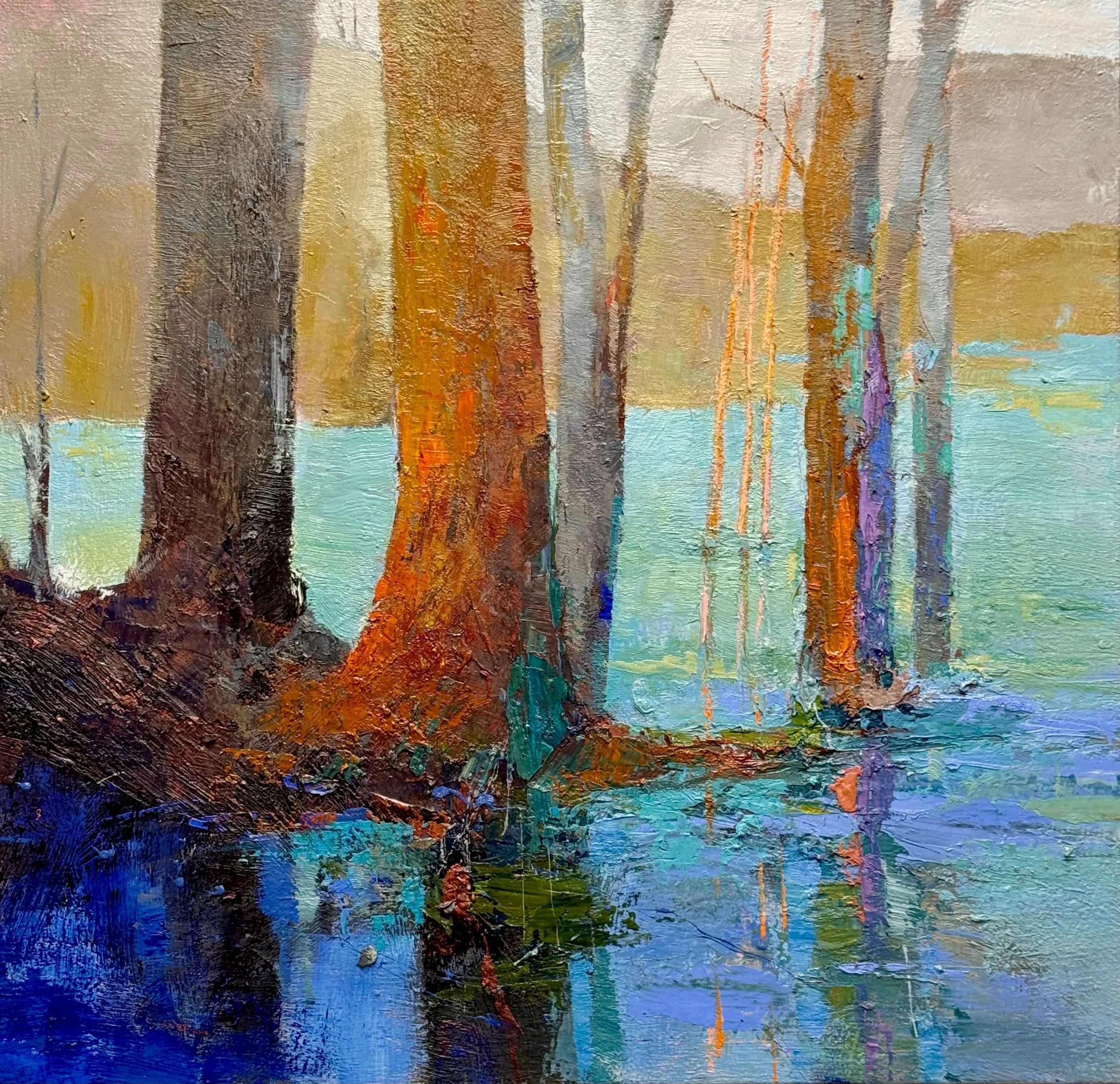
(a high-chroma version) — This is visually aggressive. The orange-into-cobalt temperature war is working hard and winning. My only honest pause: the upper left quadrant feels slightly disconnected from the intensity happening below — the warm ochre field reads a bit flat against the drama of the foreground. But that may be the painting's way of giving the eye a rest. I don't think it needs fixing — I'd call it finished with that one note registered.
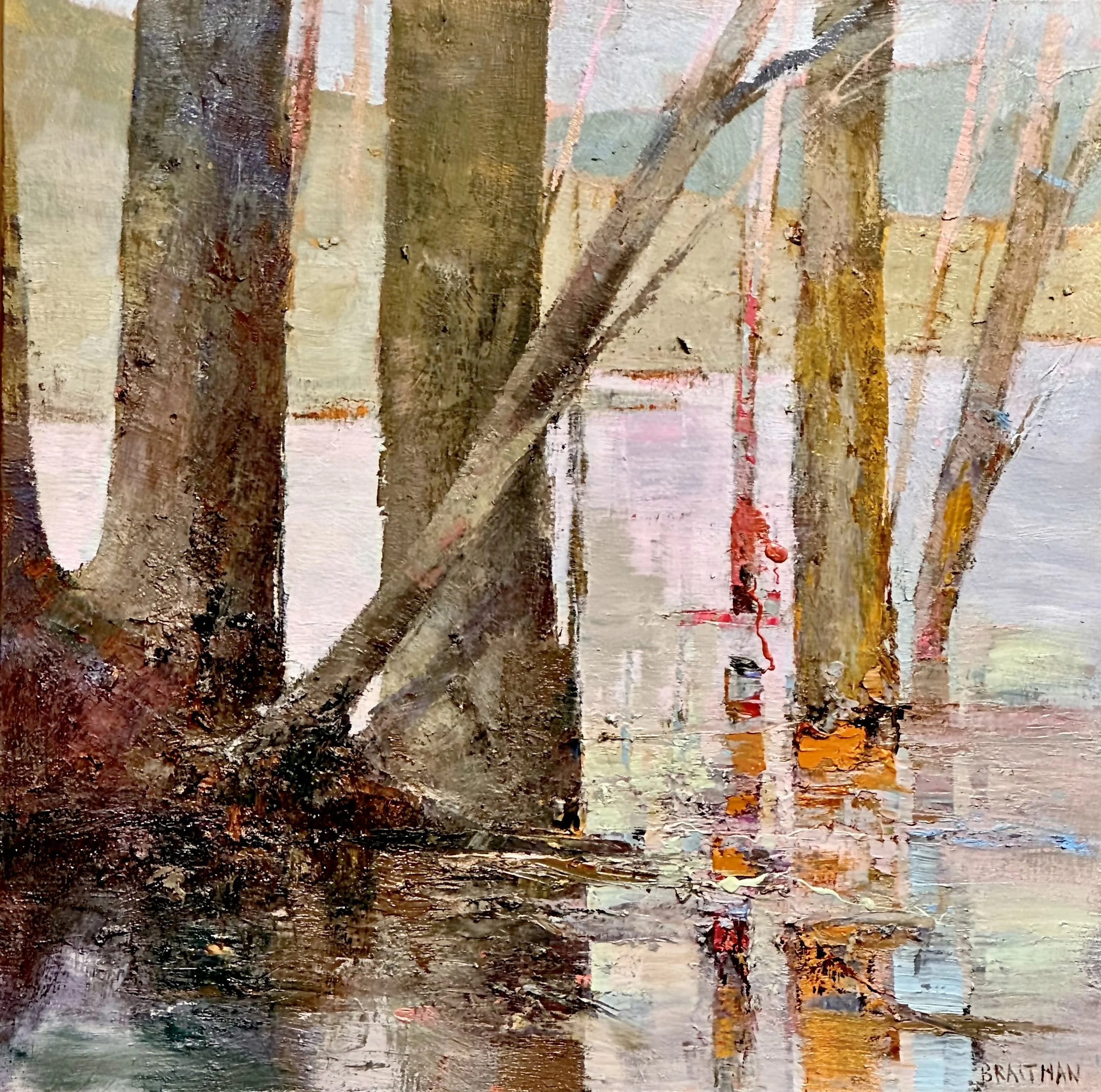
A cooler, more muted Savage trees — This one reads as resolved. The color temperature restraint is doing real work — the pinks and grays create a unified atmosphere, and the tree structure feels genuinely earned rather than imposed. The reflections in the lower zone have exactly the right amount of chaos. I call this finished without hesitation.