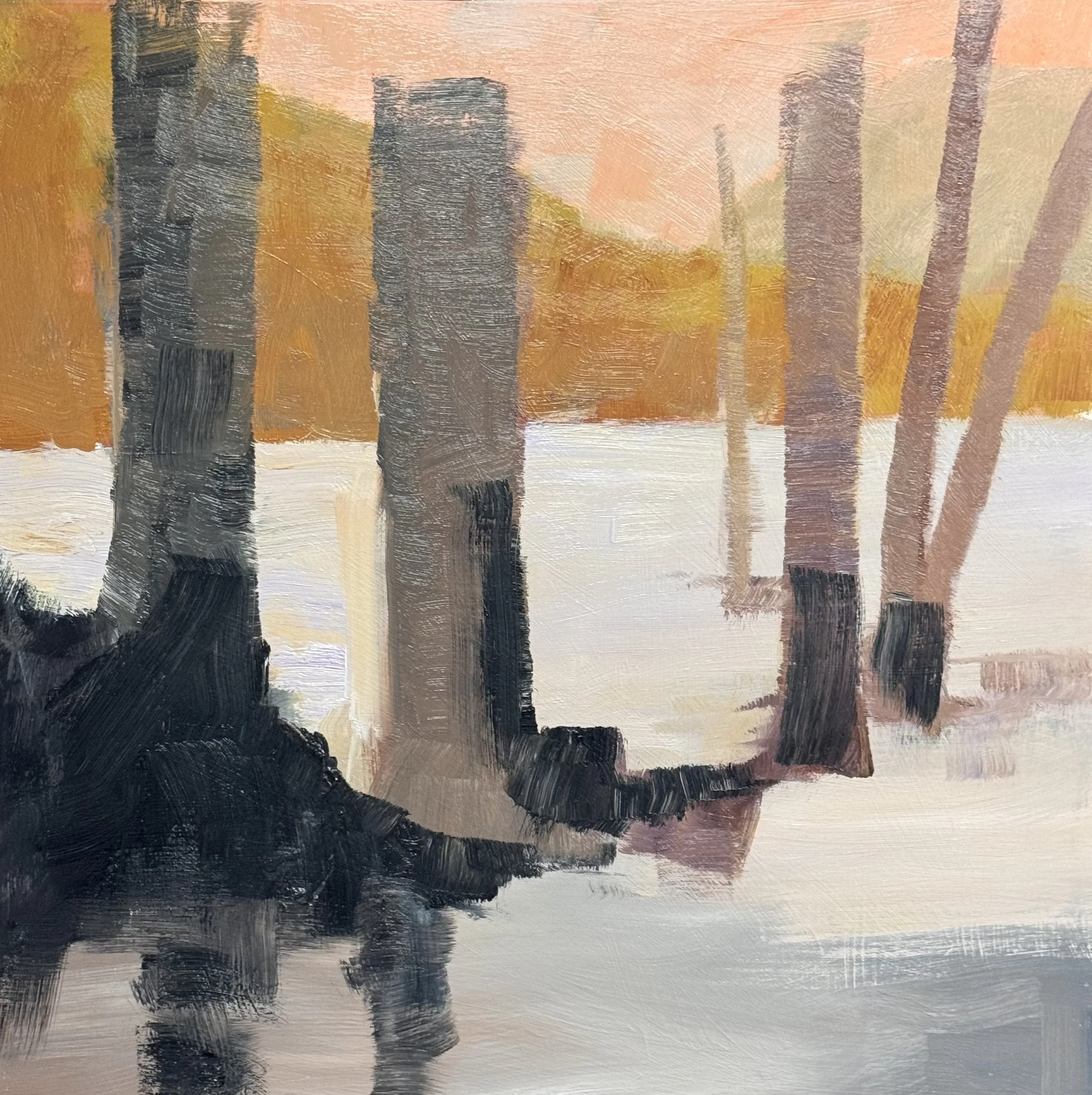
.
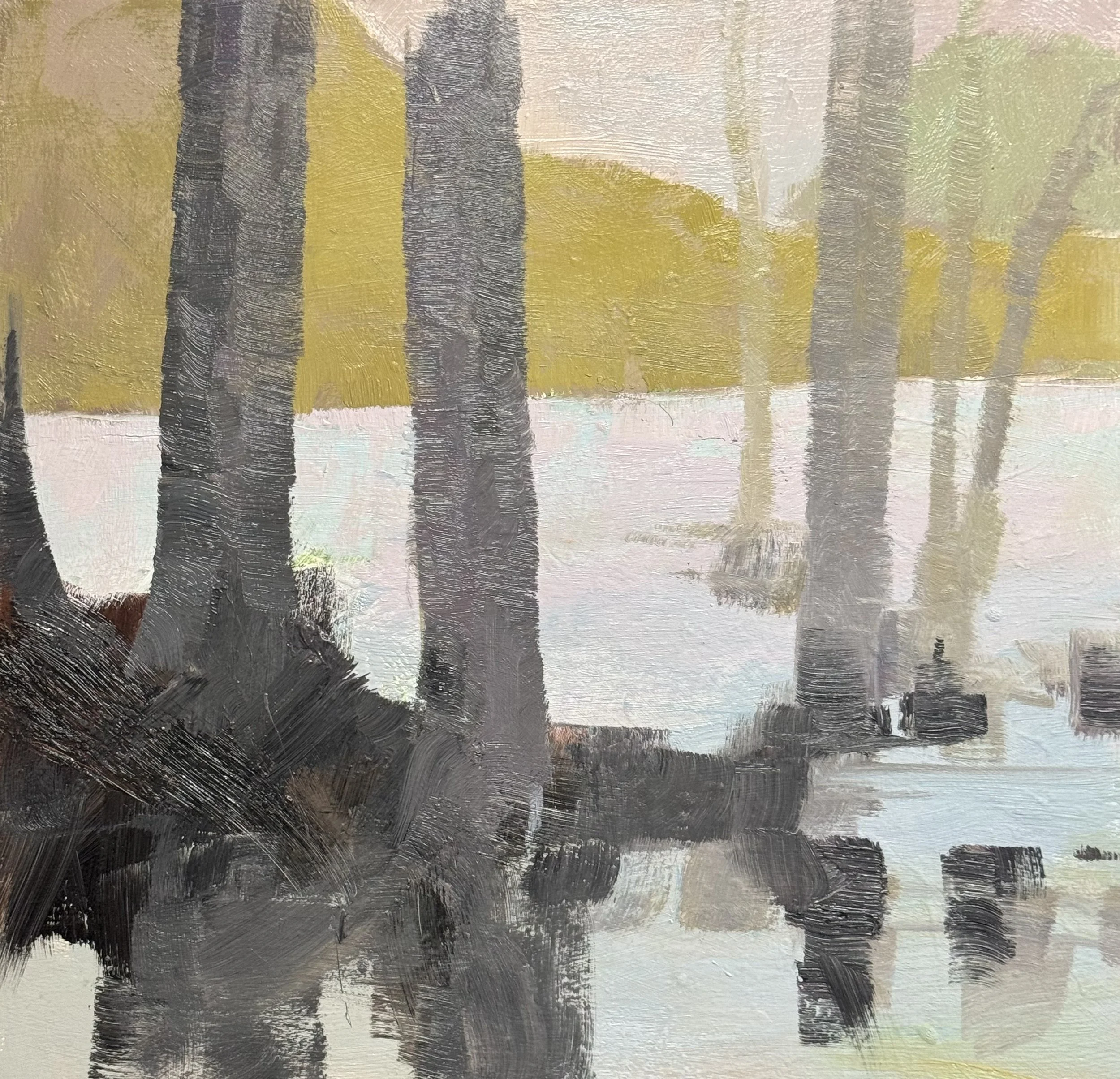
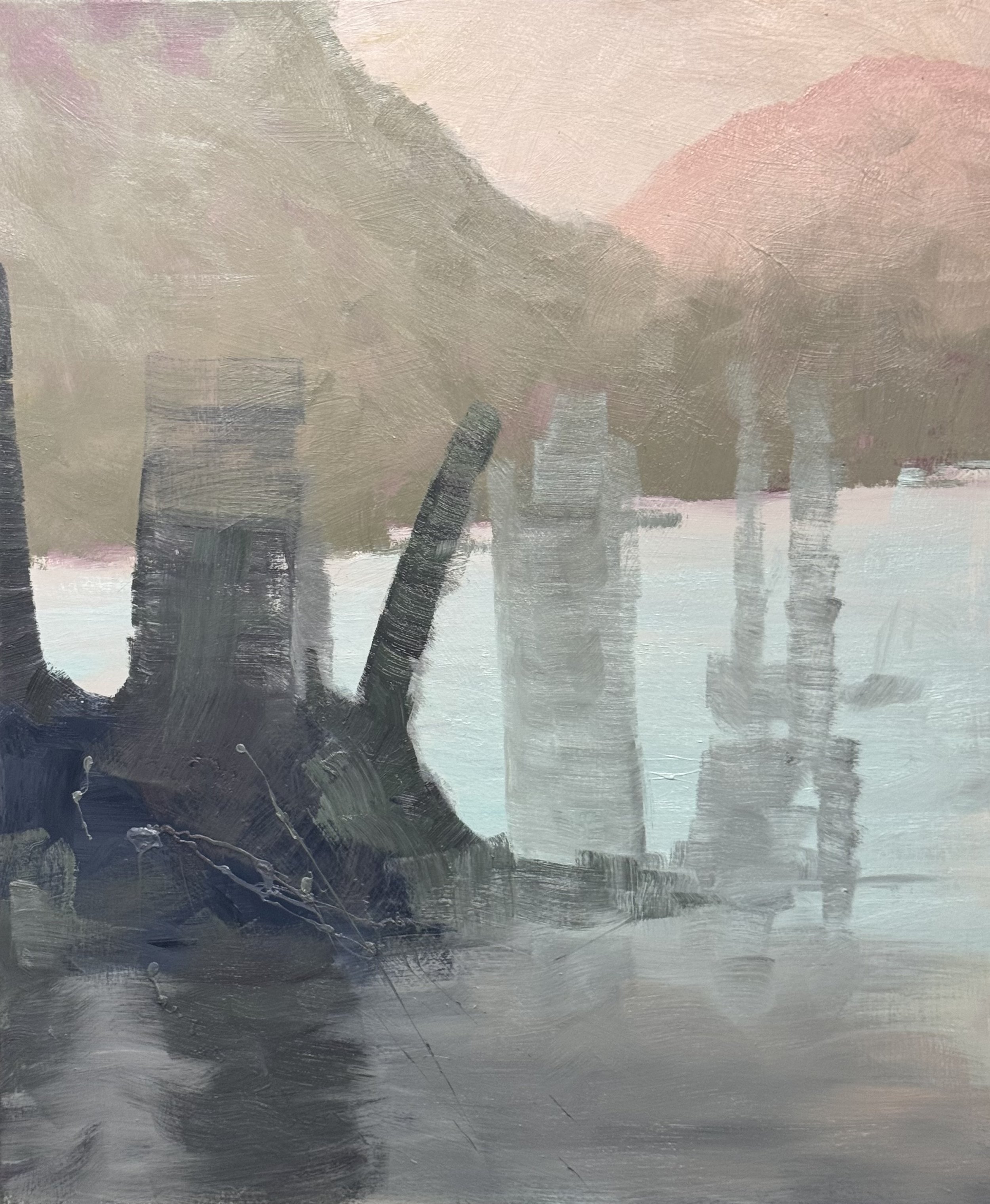
This is the 2nd layer on this painting. My job this layer on all 4 of these Savage paintings is to complicate the color and establish the position and 1st preliminary position of the vertical structure (trees)
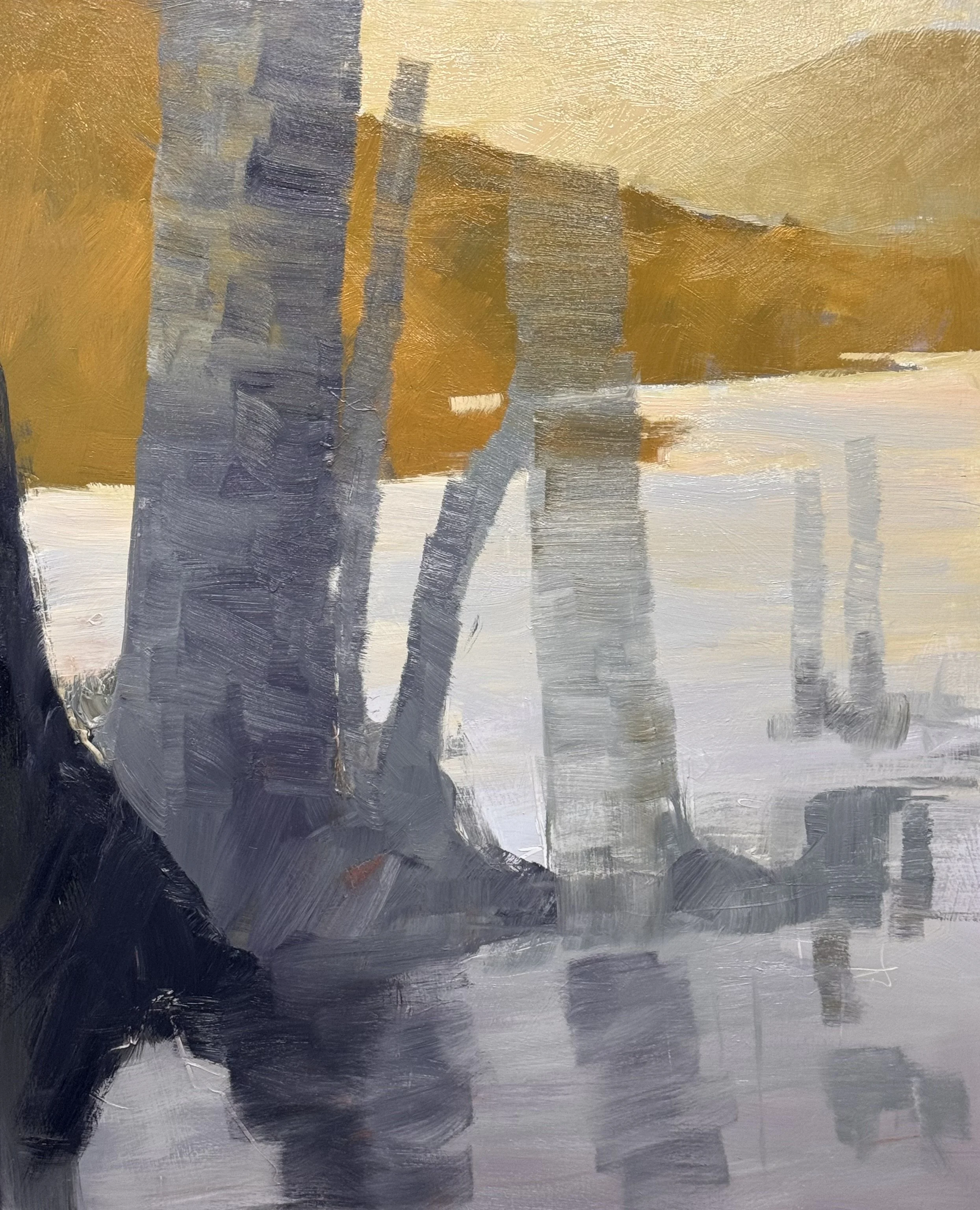
60 x 48 inches, Savage Trees IV
in all cases the trees themselves and their reflections constitute the vertical additons to the paintings. I want to be able to maitain the value progression in all of these but lay in a color in a changing value to match the 1st layer, allow some of the 1st layer to shine through, set up for a final or 3rd layer on the prismatic Progression that lets these paintings sing.
Simple narrative — maximum color and surface freedom. The trees and their reflections give the eye exactly enough to hold onto, which frees everything else to operate at full complexity without losing the viewer.
It's the same principle Rothko understood. The rectangle isn't the subject — it's the permission. Strip the composition to its most essential architecture and the color becomes the event.
Your vertical/horizontal opposition — trees against water — is about as essential as it gets. Two forces. Everything else is painting.pleasP
The Savage Paintings — Layer by Layer
Four canvases. Same simple narrative: trees as vertical architecture, water as horizontal mirror. Everything else is painting.
The content is almost willfully spare — and that's precisely the point. Simple narrative allows for the most complex and unique color and application. The trees and their reflections give the eye exactly enough to hold onto. Which frees everything else.
The System
First layer — biggest strokes, broadest moves. Value architecture established. Color temperature declared.
Second layer — color complication begins. Not glazes. Color mixed to correct value on the palette, then applied with a vigorous dry-brush technique — heavy paint, selective deposit. Open strokes and dragged strokes coexist. The first layer's texture becomes the filter.
Third layer — same mechanism, now with two layers of accumulated texture participating. The brush proposes. The surface disposes.
What emerges is a unique kind of pointillism — not Seurat's additive dots on white ground, but a physical collision between layers. Color deposits selectively against the ridges and skip points of what's beneath. The eye does the mixing at distance. The paint film does the work up close.
The Color Logic
Each of the four Savage paintings operates in a distinct color temperature:
Painting 1 — pink/mauve, cool and atmospheric, compressed value range
Painting 2 — amber/gold, warmest and most decisive, strongest value contrast
Painting 3 — yellow-green against blush, the most chromatic tension
Painting 4 — orange/peach, most saturated, trees most architectural and column-like
The second layer's job across all four: complicate the color without collapsing the value structure. Introduce the opposite temperature pole. Establish the first preliminary position of the vertical structures — trees as both subject and armature.
The third layer resolves or intensifies what's already in conflict. By then the surface is doing half the work.
The Deeper Principle
The Savage series as a group makes the individual paintings stronger. Four canvases working the same simple narrative through four different color temperatures means the viewer eventually stops reading "trees and water" and starts reading color itself as the subject. The content becomes transparent.
What remains is surface, temperature, buildup.
This is the Rothko principle applied to landscape: the rectangle — or in this case the tree — isn't the subject. It's the permission.